08 January 2026
Share


“There is no sincerer love than the love of food,” wrote George Bernard Shaw. For these chefs, spread across France, that love extends beyond the plate — to the places they grew up and traditions that shaped them. Whether they were born into restaurant dynasties, with childhoods marked by the rhythm of service and the aromas of stocks and sauces, or they’ve built their own havens, trading brigades of staff for a more personal approach to hospitality, the kitchen remains the center of life.
Find your hotel
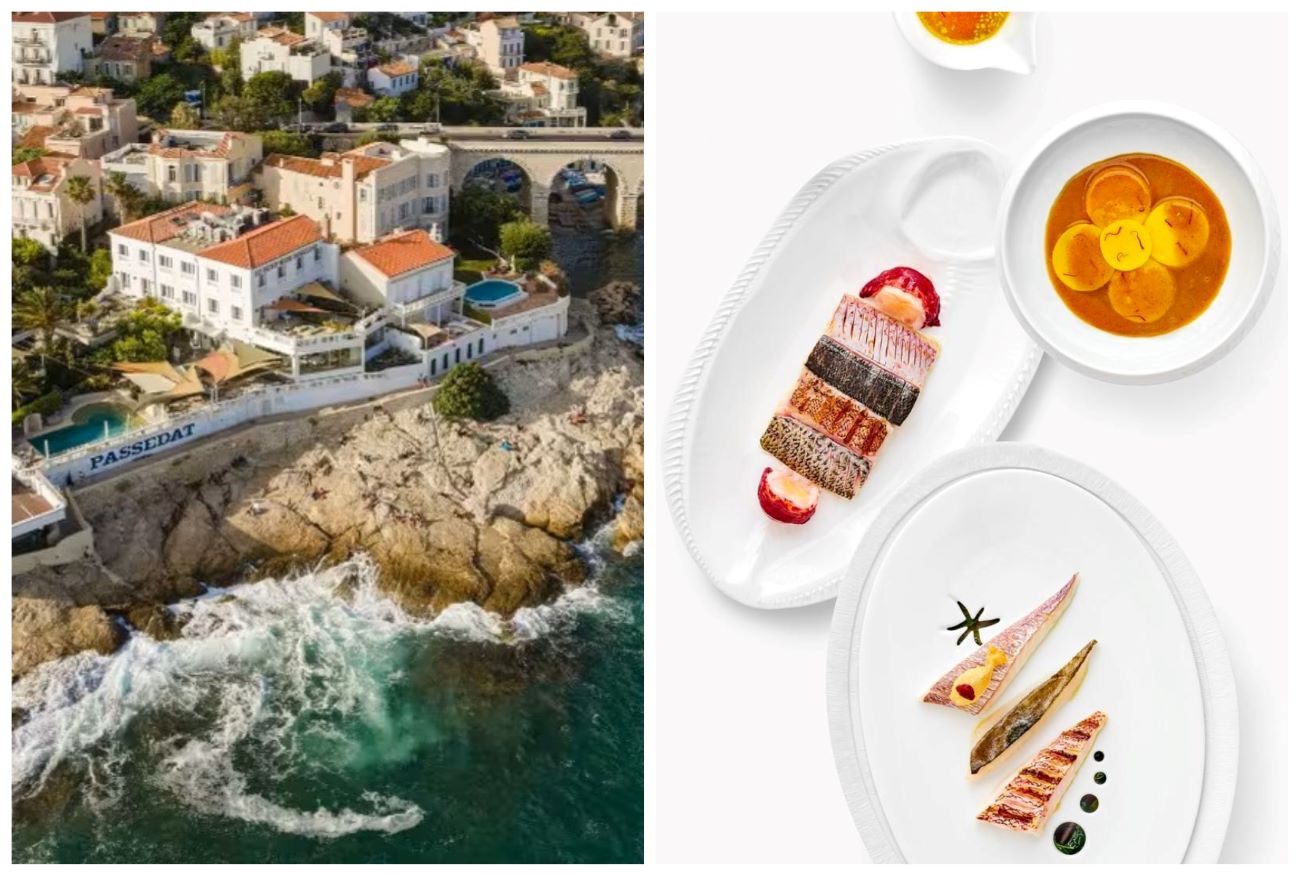
1. Gérald Passedat — Le Petit Nice in Marseille
Set above the rocks at the water’s edge, the white villa known as Le Petit Nice, that's now a Three-Star restaurant and a hotel of 19 rooms with a MICHELIN Key, has been in the Passedat family since 1917. Bought by Gérald Passedat’s grandfather, a Compagnon du Tour de France in baking and cooking, it began as a modest inn where the whole family worked. Next came the chef’s father, once an opera singer, who expanded and modernized the house in the 1950s, introducing early innovations like refrigerators and guest rooms with televisions.Awarded Three MICHELIN Stars in 2008, Passedat's restaurant still cooks in the same villa, drawing on a century of family history. Menu highlights include the Loup Lucie Passedat — an homage to his grandmother, who loved sea bass — steamed with green tomatoes and served with a sauce combining olive oil, basil, coriander and a touch of truffles, recalling the family’s Quercy roots. Of his ultrarefined bouillabaisse, served in seven stages, the chef says, “My approach is like a voyage under the sea, going deeper level by level, to arrive at the main dish.”
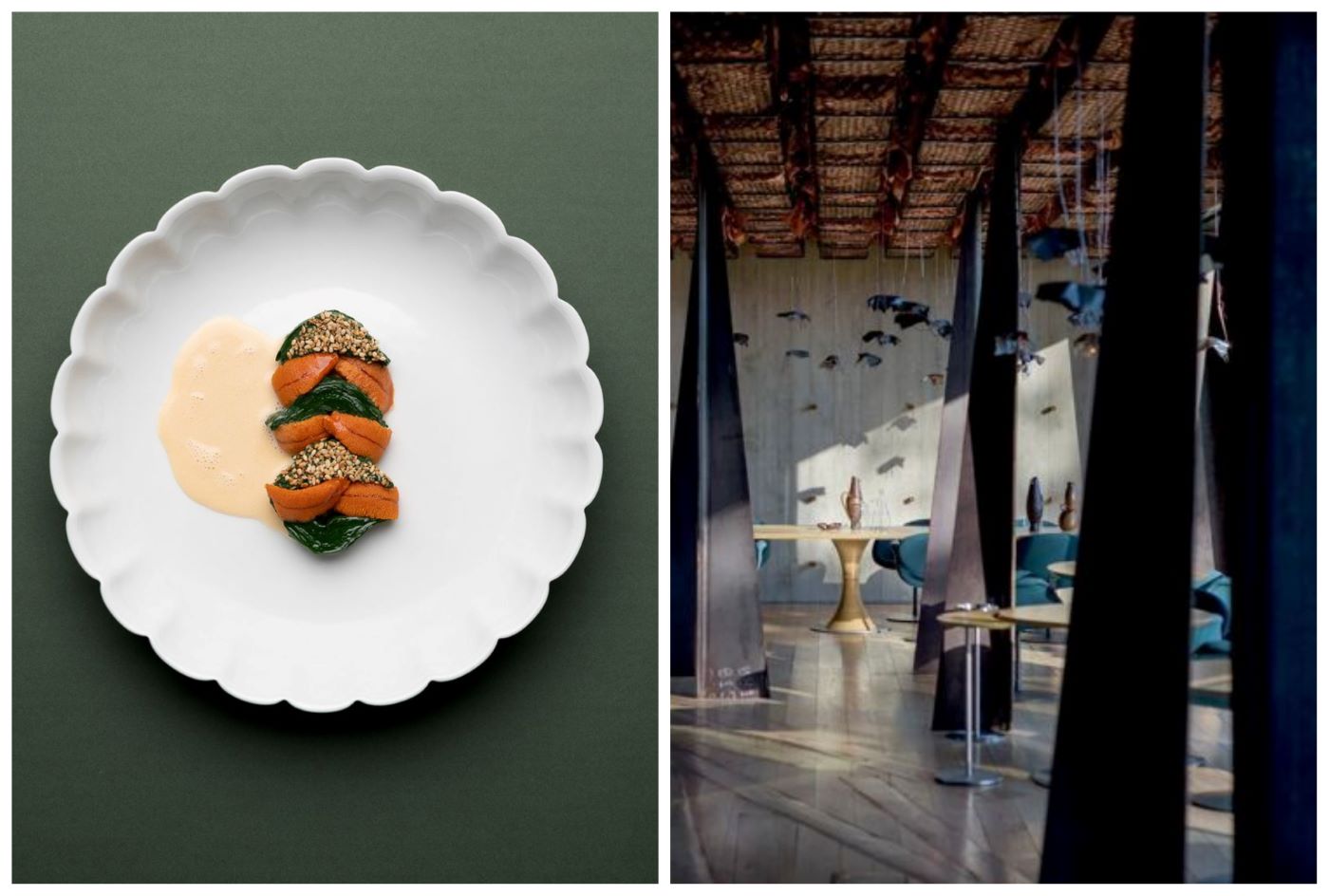
2. César Troisgros — Le Bois Sans Feuilles in Ouches (Loire)
Fourth in the Troisgros line, Chef César Troisgros grew up in the family restaurant in Roanne, where cooking was simply part of daily life. After early dreams of becoming a musician, he chose the kitchen at age 18, training in Paris, Spain and the United States, and then returning just as he had been preparing to leave for Japan. That unmade journey instead led him to work alongside his father, Michel, for a decade before a gentle passing of the baton.
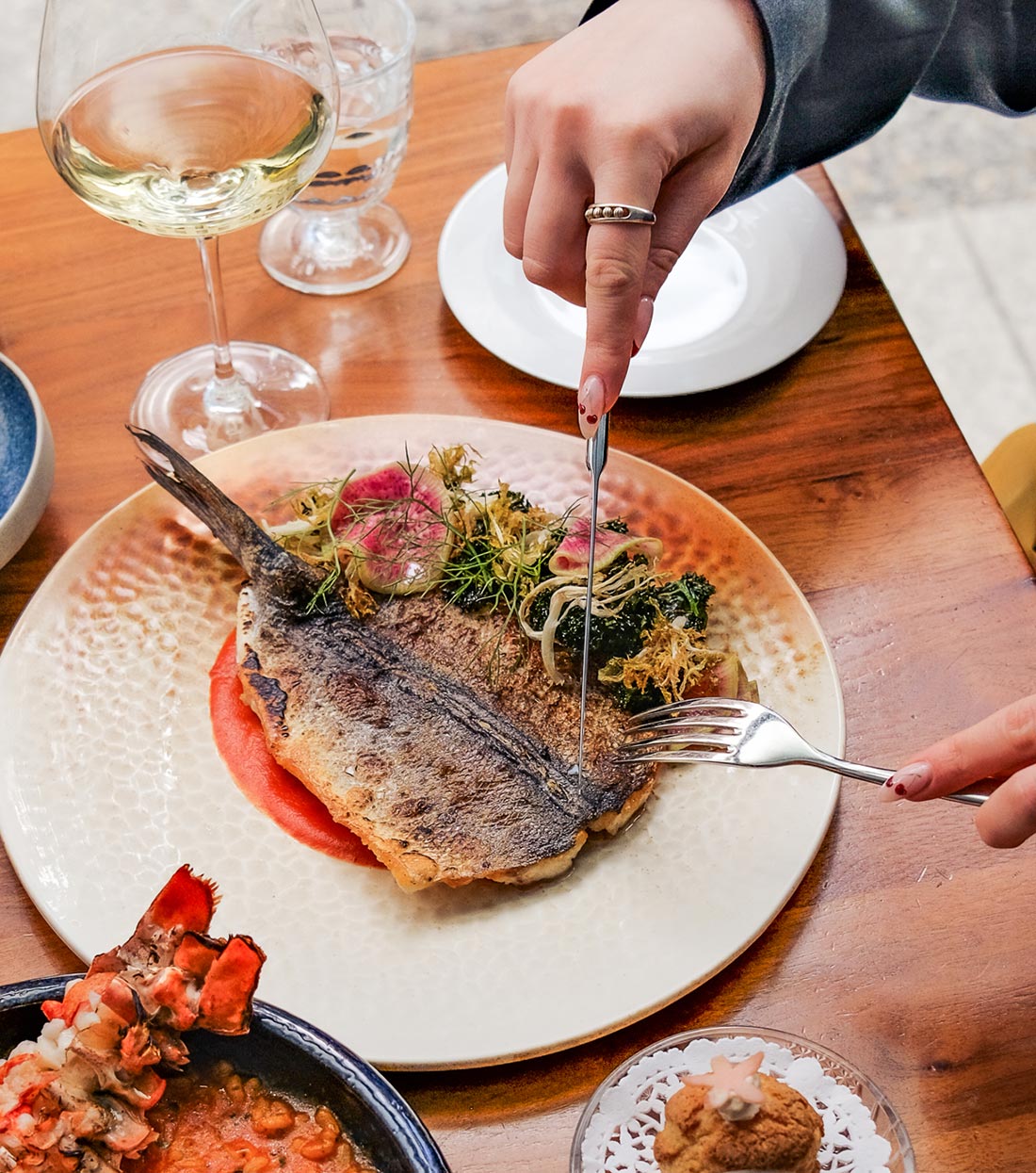
Today, at Le Bois Sans Feuilles in Ouches, he shapes a vibrant cuisine that reflects the surrounding orchards, fields and permaculture gardens. A recent dish — pike perch lightly grilled, served with a leaf of chicory brushed with blackcurrant reduction and fresh currants, where the fish acts as a buffer between acidity and bitterness — conveys his personal sense of simplicity and harmony. “The Rolling Stones make worldwide hits with four chords,” he says. “Cooking should be just as clear.”
Find your hotel
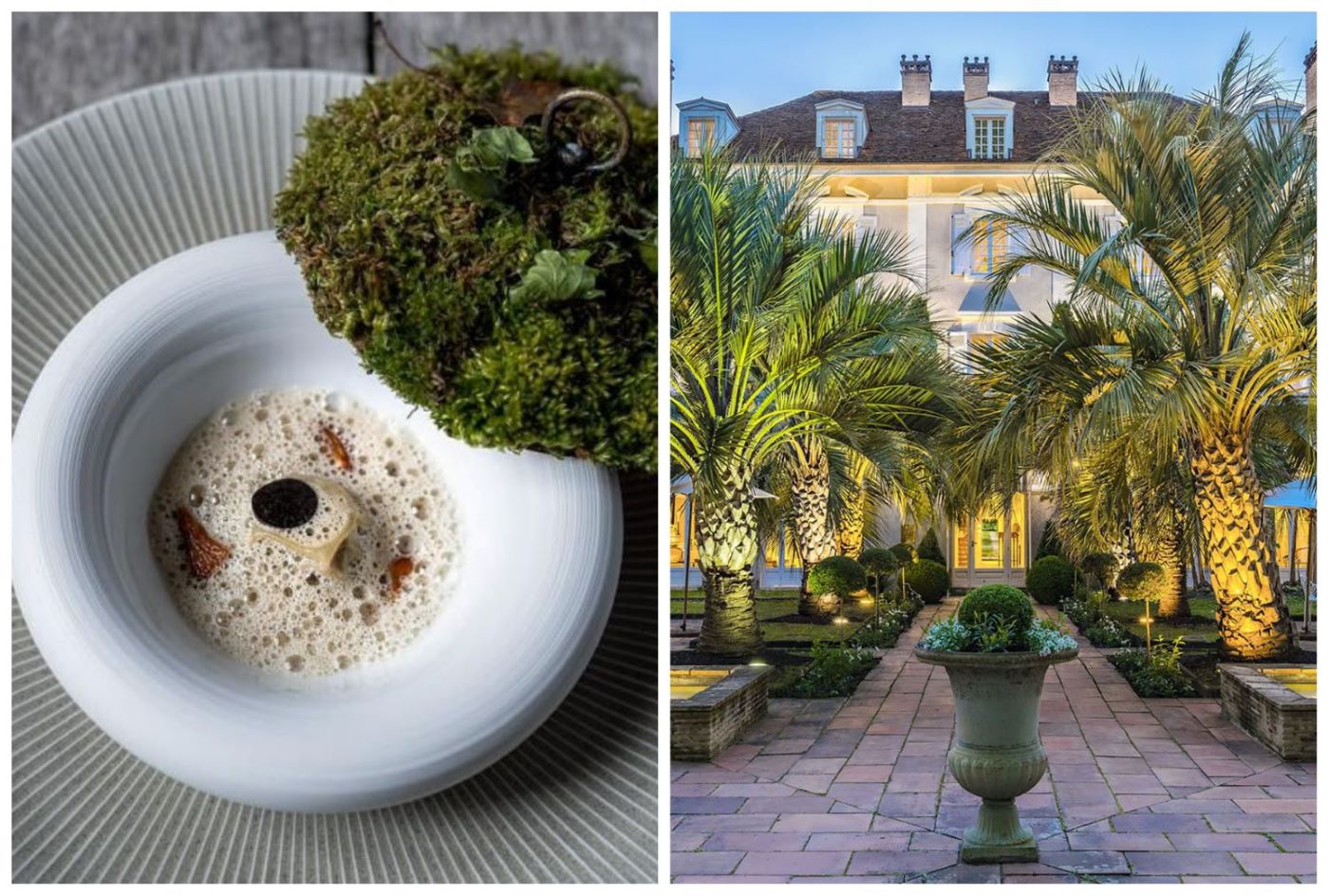
3. Hugo Souchet — Les Prés d’Eugénie - Michel Guérard in Eugénie-les-Bains (Landes)
Tucked away in the wooded, tranquil Landes countryside, Les Prés d’Eugénie - Michel Guérard has held Three MICHELIN Stars for 48 years, and Chef Hugo Souchet now carries forward the legacy begun by Michel and Christine Guérard. “There was never a moment when Monsieur Guérard handed me the keys,” he says. “It happened in time, through trust.”Once the Guérards’ home, the restaurant — and hotel of 45 rooms (Two Keys) — are filled with their personal collection of Second Empire-era portraits, statues and hunting-themed art set against a dreamy colonial backdrop of palms in the garden outside. “There are two dishes I find almost impossible to touch,” says Souchet, referring to Guérard’s classic tourte de pigeonneau (pigeon pie) and homard fumé, lobsters smoked in their shells for 48 hours and served with a buttery saffron-scented sauce. Éléonore Guérard, who manages the property along with her sister, Adeline, recalls that her parents often said, “Heritage isn’t the veneration of ashes, but the transmission of fire.”
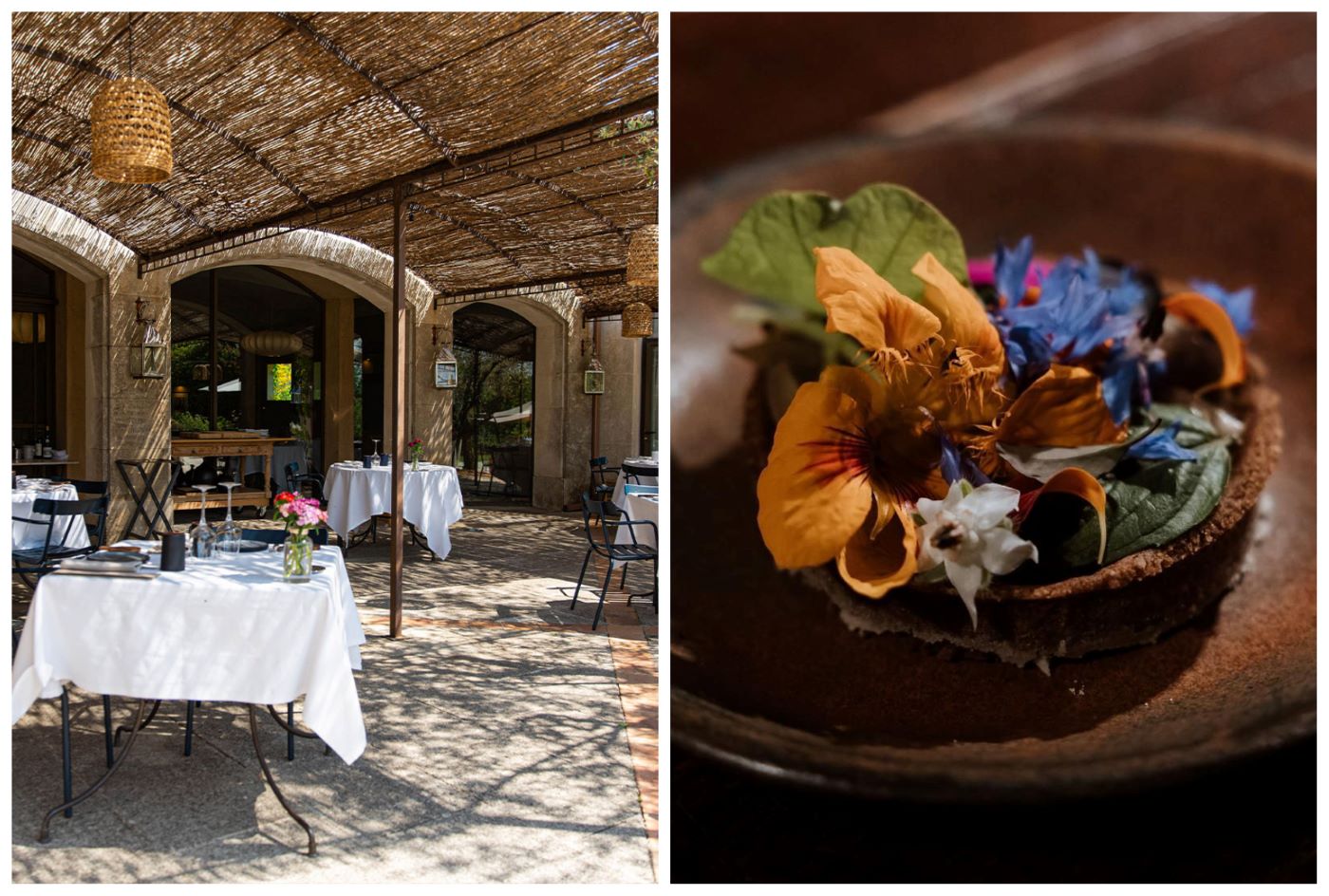
4. Nadia Sammut — La Fenière in Lourmarin (Provence)
The daughter of Reine Sammut — the self-taught chef who earned a MICHELIN Star at La Fenière in 1995 and brought North African warmth to Provençal cooking — Nadia Sammut represents a new generation rooted in the same family soil. She lives on the property, in the ivy-clad 19th-century stone farmhouse where she grew up, beside the restaurant and small hotel (Two Keys) she rebuilt amid fruit trees, olive groves and experimental gardens.Helming the first MICHELIN-Starred gluten-free restaurant, Sammut has redefined the relationship between food and health through what she calls cuisine nourricière (nourishing cuisine), an approach that links agriculture, research and education. Through her Assiette 2040 program, she reintroduces forgotten crops such as chickpeas, carob and pistachio, while exploring fermentation and solar-powered cooking within a regenerative ecosystem. Among her dishes, a vegetable reduction made from carob mirrors the depth of a classic jus, but without meat.
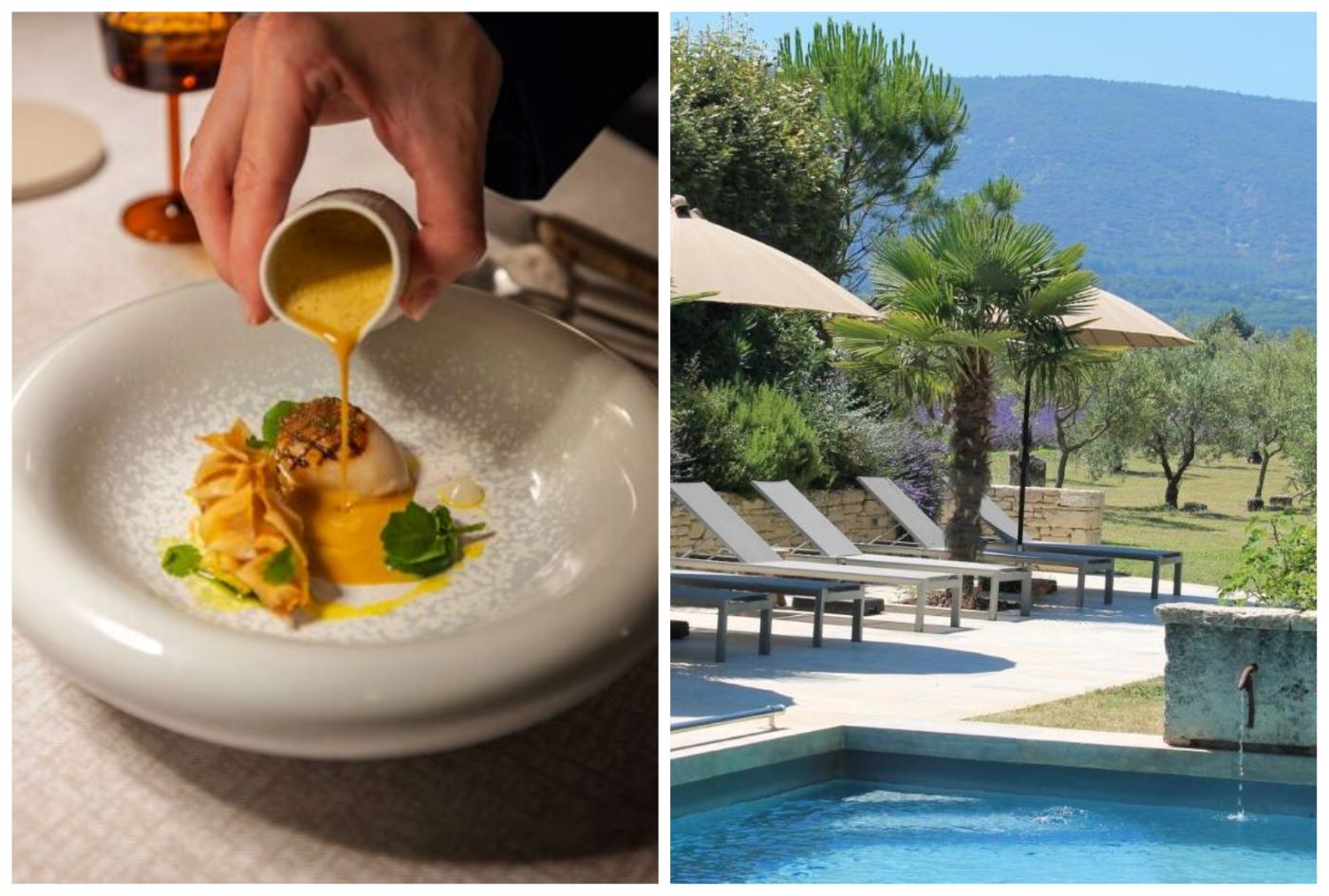
5. Christophe Bacquié — La Table des Amis in Bonnieux (Provence)
After earning Three MICHELIN Stars at Le Castellet, Chef Christophe Bacquié chose a smaller stage: La Table des Amis, on the Luberon property Le Mas les Eydins, where he and his wife, Alexandra, live. Each night he cooks for eight tables — or sometimes a single long one set outdoors between rows of lavender in summer.The fixed menu changes daily, shaped by what nearby producers and his fisherman at Le Grau-du-Roi deliver that morning: 95% of ingredients come from the surrounding countryside as well as his own property — figs, olives, herbs, fruit for jams and the olive oil pressed from 170 trees. “I wanted to live my craft differently,” Bacquié says, “to come back to the essentials.”
His cooking follows the rhythm of the day: lamb from a nearby farm, green beans picked that morning or mushrooms gathered that week in Banon. Alongside the restaurant, Le Mas les Eydins offers five guest rooms in the same spirit of simplicity — a maison de famille (family home) in utter peace, save rustling leaves and whirring cicadas.
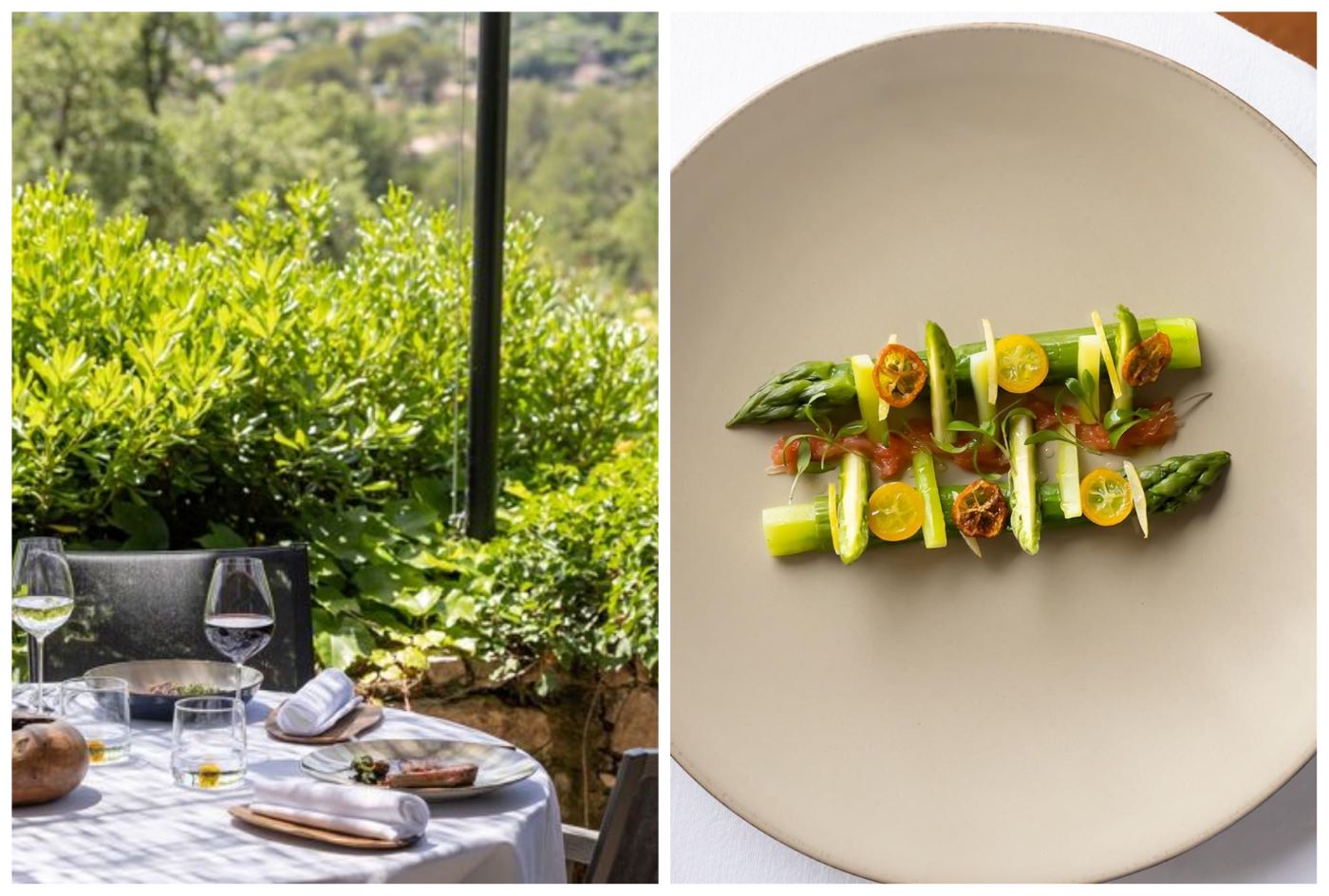
6. Sébastien Sanjou — Le Relais des Moines in Les Arcs-sur-Argens (Provence)
Set in a 16th-century stone bergerie (sheep pen) once farmed by monks from the Lérins Islands, Le Relais des Moines (One Star) lies among truffle oaks, pines and the vineyards at Les Arcs-sur-Argens. Chef Sébastien Sanjou bought the five-acre property at 19 and rebuilt it gradually, creating both his restaurant and his home. “My parents were cooks and had a small hotel-restaurant in the Hautes-Pyrénées. I literally grew up in a restaurant and lived in that rhythm — service, prep, cleaning, customers,” he says. “Here, the dining room and the house are one.”A native of Bigorre, Sanjou favors the brightness of Provencal dishes. His menu changes continually with the collaboration of local producers, including vegetables from nearby farms and olive groves, and fish delivered directly from local fisherman from Martigues or Saint-Raphaël. Occasionally the chef brings in foie gras or poultry from the southwest, a nod to his origins. “I don’t keep a dish forever,” Sanjou says. “Nature decides what we cook.”

7. Anne-Sophie Pic — Maison Pic in Valence (Drôme)
Anne-Sophie Pic grew up above Pic, her family’s Three MICHELIN-Starred restaurant and One-Key hotel of 16 rooms in Valence, where the rhythm of service marked the hours. But it wasn’t always easy: Her bedroom was above the big ventilation hood that roared until midnight. “I’d call my father and ask him to turn it off so I could get to sleep,” she recalls. “He’d say, ‘I can’t — the dining room will fill with smoke.’” From upstairs she learned to tell time by rich aromas and sounds: the sauces, the clatter of pans, the rush when rain sent diners in from the garden.
The family story began in Ardèche, where her grandfather André cooked before crossing the Rhône to open in Valence in 1936. Four generations on, Pic lives across the street from Pic, surrounded by gardens of herbs and flowers. Among her signature dishes are berlingots — pyramid-shaped pasta inspired by the candies of Carpentras — alongside reinterpretations of her father’s and grandfather’s iconic dishes: the truffle turnover and sea bass with caviar.
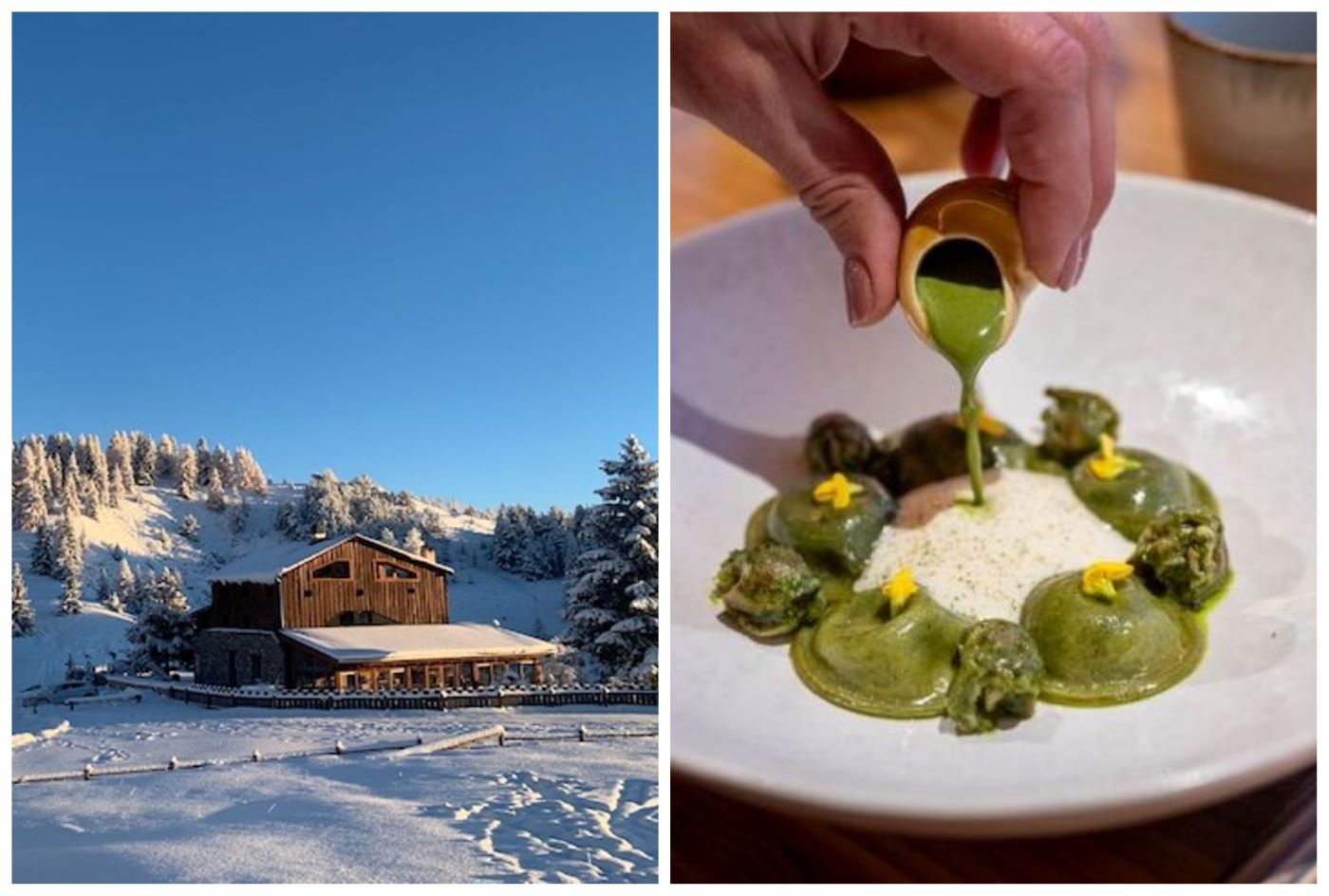
8. Christophe Billau — Auberge Quintessence in Roubion (Provence)
“After years working for others, we wanted something that belonged to us,” says Christophe Billau, who, alongside his wife, Pauline, built Auberge Quintessence, a small stone inn in the mountain village on the pine-covered slopes above the Tinée Valley. Their daughter Clémentine works beside them in the kitchen, and the family lives just below the restaurant.A keen mountain sportsman, Billau chose altitude and open air over the Riviera coast. “Up here, everything depends on the season — not just the products,” the chef says. “My cuisine isn’t rustic but I try to cook in tune with that rhythm.” The interiors are all wood — warm, unadorned and built by hand — with a handful of guest rooms upstairs. The chef works with nearby producers for vegetables, game, lamb and dairy, while his wife oversees the affinage, the aging and ripening of local cheeses displayed in cases by the bar. Beehives near the terrace supply honey from the larch trees for sauces and delicious desserts.
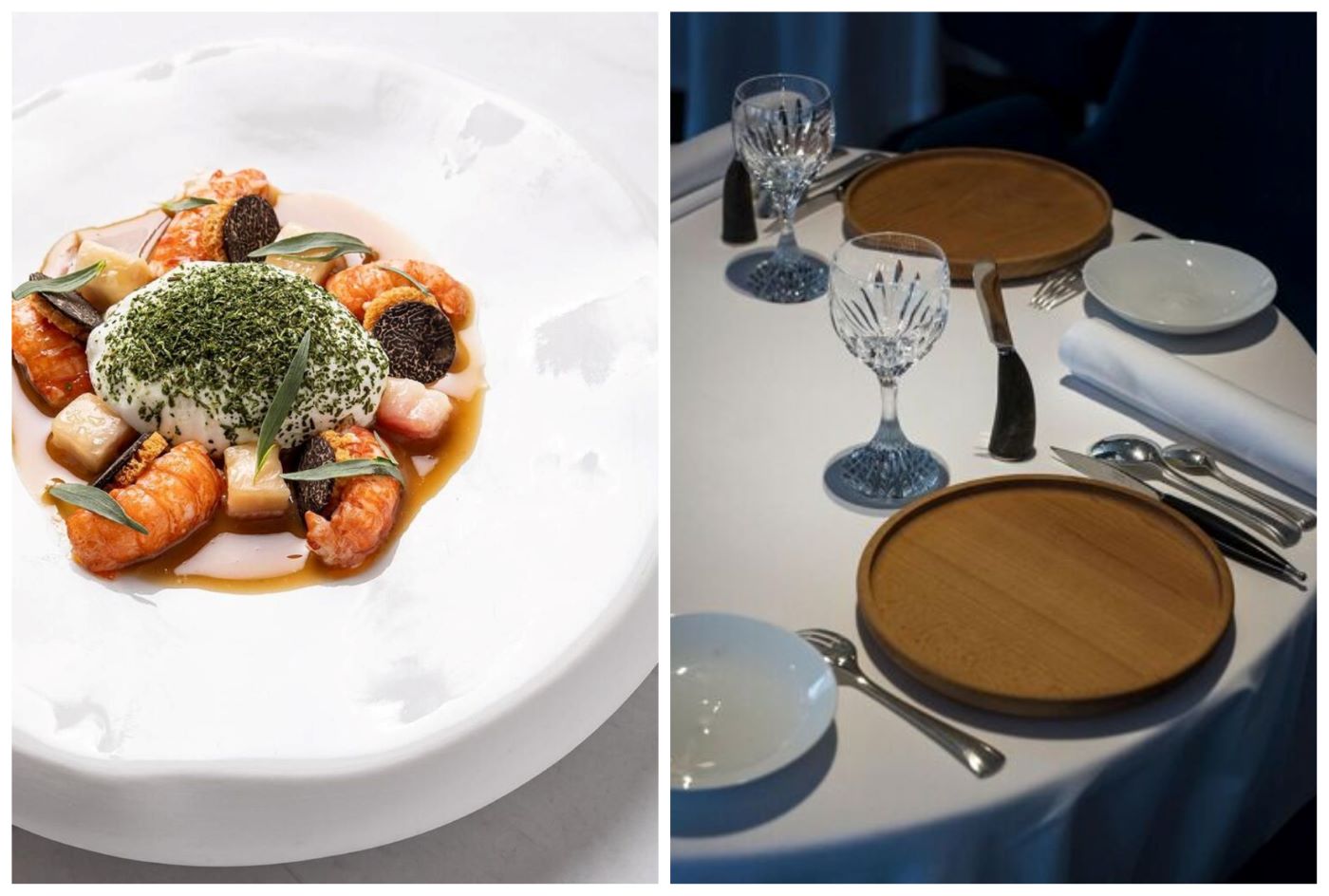
9. Frédéric Doucet — Maison Doucet in Charolles (Burgundy)
Chef Frédéric Doucet was born in the house where his parents ran an auberge (inn) in Charolles, at the heart of the Charolais countryside. His father cooked, his mother greeted guests in the dining room, and he and his sister grew up in the middle of service, helping on weekends and learning the gestures of hospitality almost by instinct. “We have this in our blood,” Doucet says. “It was never a constraint — it was just life.”In 2007, he bought the family inn and transformed it into Maison Doucet, a hotel-restaurant that keeps the same warmth in a more contemporary frame. His cooking remains rooted in the land that surrounds him: a refined version of oeufs meurette (poached eggs in red wine sauce), Burgundy snails paired with celery and lovage, and a signature dessert: a warm soufflé made with hay and alfalfa — drawn from the same forage that feeds the Charolais cattle in the nearby pastures.Burgundy snails paired with celery and lovage, and a signature dessert: a warm soufflé made with hay and alfalfa — drawn from the same forage that feeds the Charolais cattle in the nearby pastures.
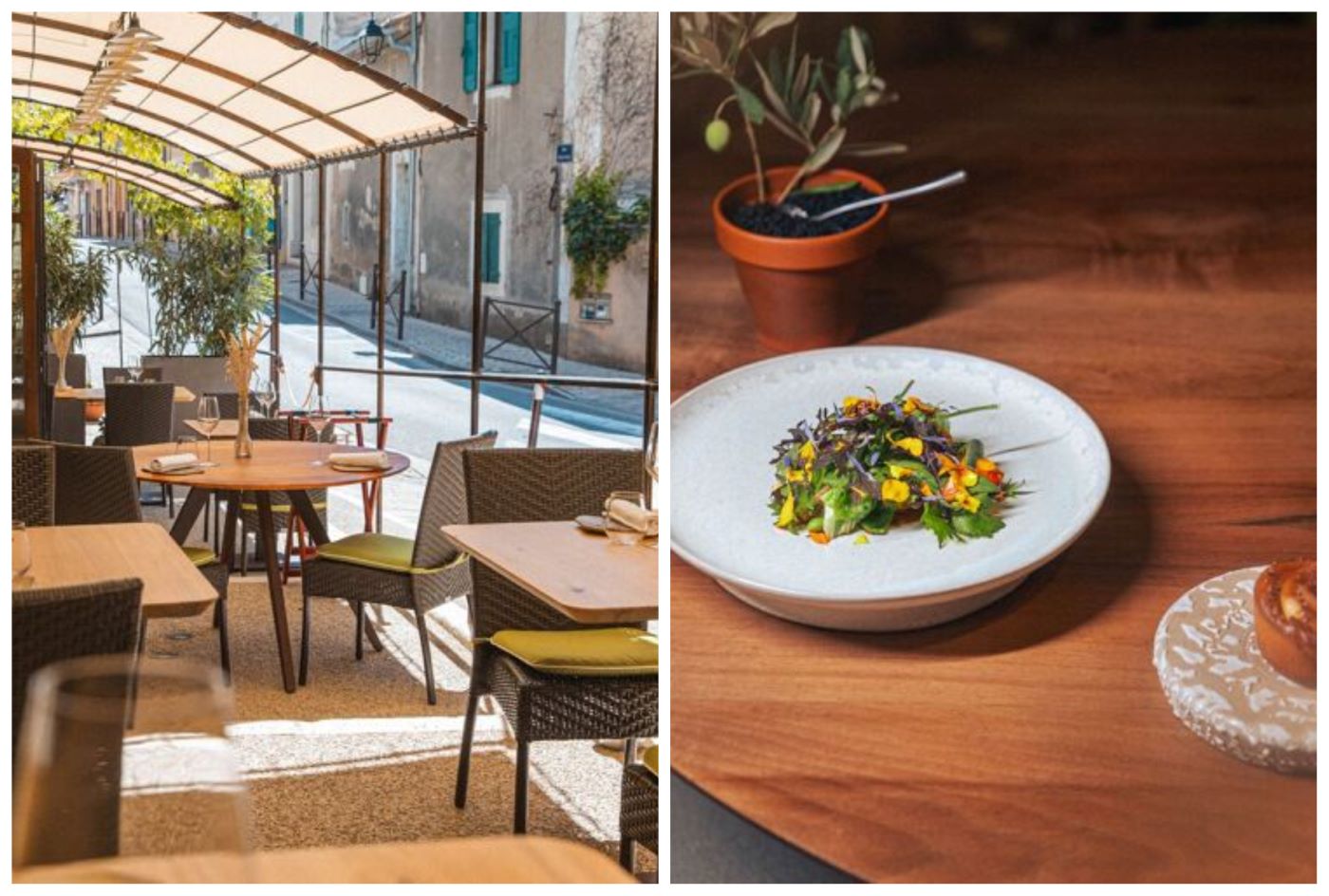
10. Julien Allano — Ju - Maison de Cuisine in Bonnieux (Provence)
At Ju – Maison de Cuisine in Bonnieux, Chef Julien Allano lives just above the dining room — “Two steps and I’m home,” he says — in a 12th-century stone house with blond wood interiors. A portrait of his father, a young cook who died in a motorcycle accident at 25, hangs in the kitchen. Allano, who was raised by his grandparents, works closely with local growers and runs a bakery, bistro and épicerie (grocery) in the village.His five-act menus unfold as surprises shaped by the season: trout, figs, veal, forest herbs and a légato automnal of vegetables composed like musical notes, dusted with sweetened black-olive soil. One dessert, the Créponné, recreates a tale his grandmother told of children in Algiers trading coins for lemon sorbet scented with geranium and chile oil — a taste he never knew, rebuilt from memory. “I cook,” Allano says, “the way I’d like someone to cook for me.” says, “the way I’d like someone to cook for me.”
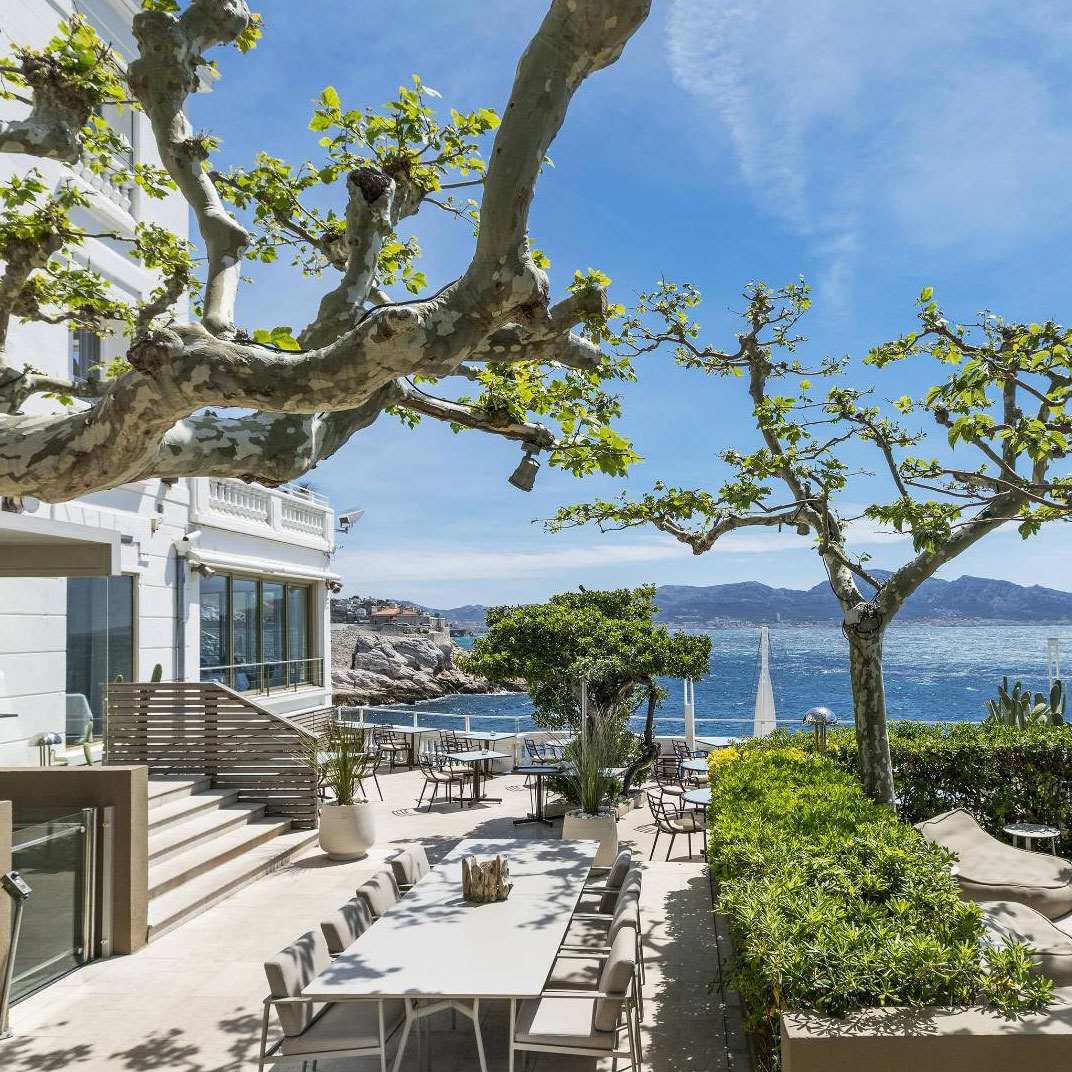
Hero Image: Le Petit Nice in Marseille has a terrace that flanks the deep blue Mediterranean Sea and has some of the best views in town. © Image courtesy of Le Petit Nice
Related articles: