12 December 2025
Share


While pho and banh mi have earned international fame, Vietnamese desserts remain one of the country’s best-kept culinary secrets. These sweet treats reflect a rich tapestry of regional cultures — from the coconut-laced delights of the South to the subtle flavors of the North. Influences from Chinese and French cuisine add another layer of complexity, making each dessert a story worth savoring.
Join us as we explore the sweet crescendo of your Vietnamese culinary journey — proof that Vietnam’s desserts are not to be taken lightly.
Sweet Soup
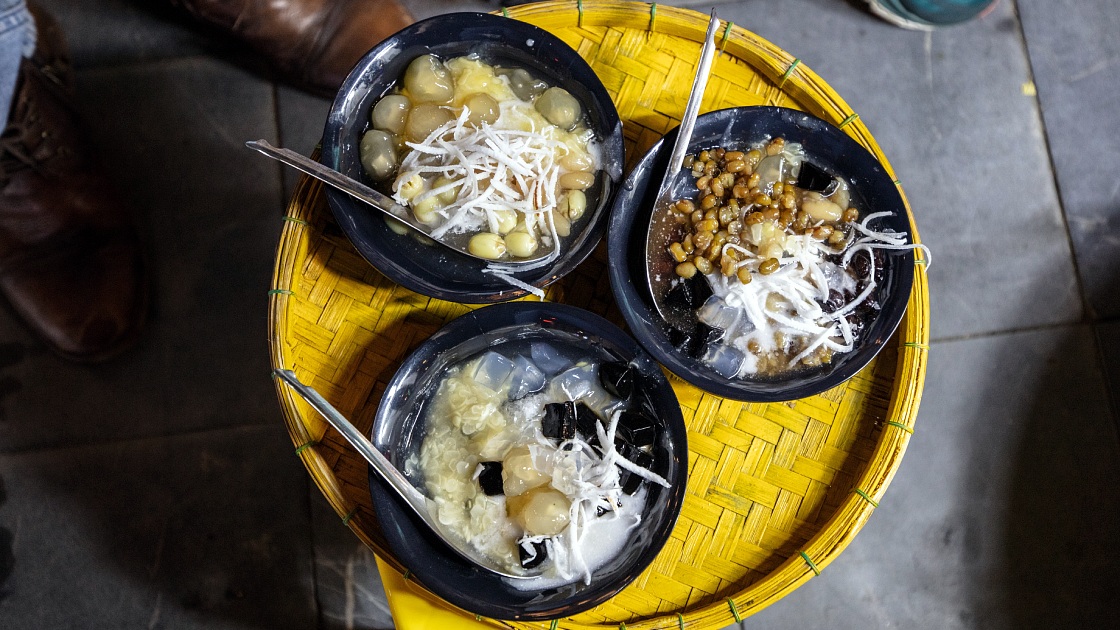
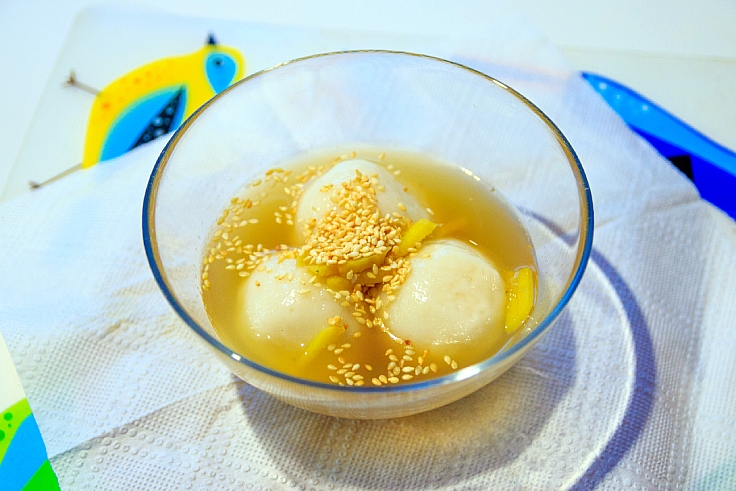
The world of Vietnamese sweet soups or che is incredibly vast, with each region offering its own distinct take using local ingredients. From beans, grains and sticky rice to coconut milk, fruits, tubers and even cereals, almost anything can be transformed into a bowl of sweet soup.Some of the most popular versions include mung bean, black bean, longan with lotus seed, banana, rice balls and sweet potato. Others are seasonal, such as cassava sweet soup, which is especially loved in the North during the chilly year-end months. In Hue, you’ll even find a sweet soup made with grilled pork wrapped in cassava flour.
Among all the varieties, pomelo sweet soup stands out as the crown jewel, thanks to its inventive use of humble ingredients. It’s made from the white pith of pomelo peel, soaked in salt water to remove bitterness. The pulp is cut into bite-size pieces and coated with tapioca starch and sugar to preserve its chewy, crunchy texture. Finally, it’s gently simmered with mung beans and coconut milk to create a light, fragrant dessert.
Want to try this treat on your next visit to Vietnam? Stop by Hoa Túc (District 1) and enjoy a comforting bowl of sweet soup — especially the pomelo version.
Banana Ice Cream
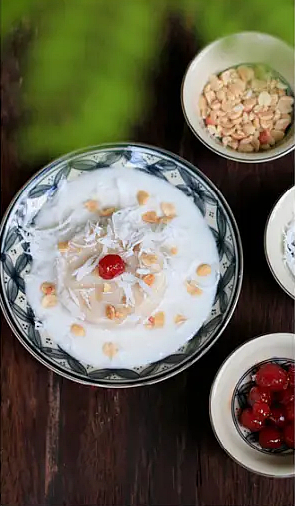
A “purely Vietnamese” dessert, banana ice cream or kem chuoi is more than just a sweet refreshment — it’s a taste of tropical summer and a nostalgic treat for generations of Vietnamese people.This humble yet delightful dessert is made from Vietnamese bananas, creamy coconut milk, shredded coconut and roasted peanuts. The coconut milk is gently cooked with tapioca starch and sugar, then left to cool. The peanuts are roasted until golden, while the bananas are peeled — larger ones halved, smaller ones left whole.
The preparation is simple. The bananas are arranged in molds and then covered with the coconut-milk mixture. A sprinkle of roasted peanuts and shredded coconut adds texture and depth, bringing a nutty, creamy note. Finally, the mixture is frozen, transforming it into icy banana ice cream.
One bite of banana ice cream, and you’ll be hooked. Try it at Mặn Mòi (Thu Duc City).
Grilled Honeycomb Cake
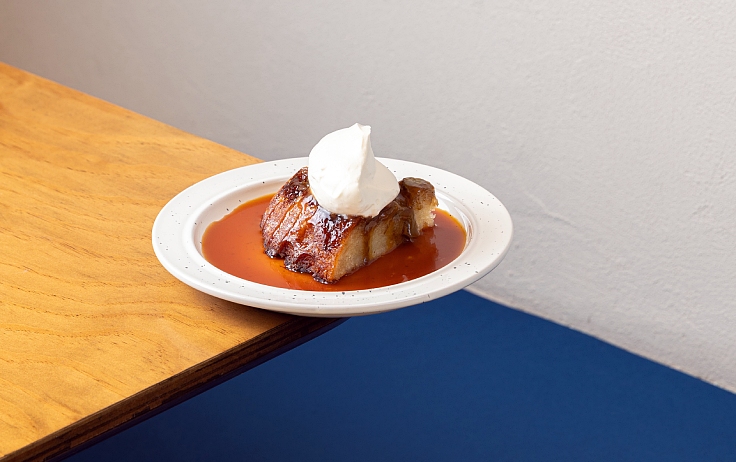
Honeycomb cake or banh bo nuong is a beloved dessert in southern Vietnam, known for its soft, spongy texture and the tiny air pockets that run through both its surface and interior.Originally from southern China, the cake has long been adapted to Vietnamese tastes. Made with rice flour, water, sugar and yeast, it gets its signature creaminess from coconut milk — a staple in southern Vietnamese kitchens.
“Honeycomb cake has great potential to go international,” says Chef Duy Nguyen of Little Bear. “It pairs easily with other ingredients like ice cream or coffee while still staying true to its Vietnamese roots.”
Inspired by his time working brunch shifts in the United States, Chef Duy began experimenting with grilling honeycomb cake and brushing it with brown butter. “French toast usually comes with something creamy, like ice cream. So I thought, why not serve grilled honeycomb cake with cold coffee ice cream and rich egg yolk? Simple, yet it all just works.”
Curious about Vietnamese honeycomb cake? Stop by Little Bear.
Coffee Flan
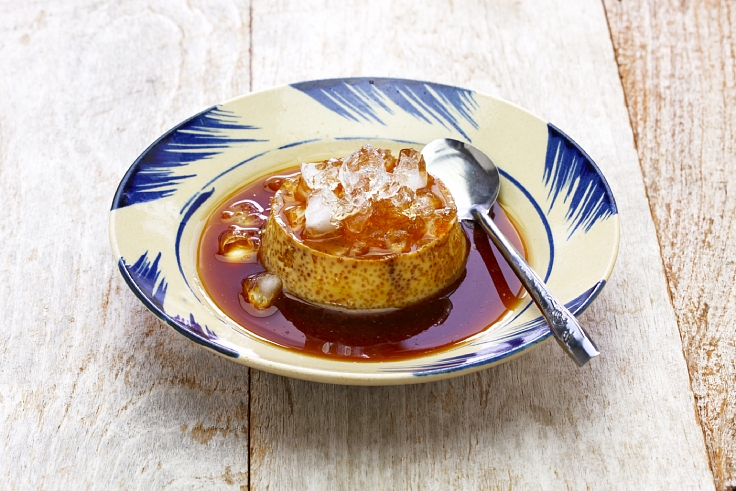
Flan, inspired by French crème caramel, was introduced to Vietnam during the colonial period. However, Vietnamese flan is steamed rather than baked — a practical adaptation from a time when ovens were rare and expensive.Though Vietnamese flan or banh flan ca phe may appear simple — made from eggs, milk (condensed, fresh or powdered) and caramelized sugar — achieving a smooth, golden custard requires care and precision.
The key lies in balancing the ratio of egg yolks to milk, often with some egg whites removed to avoid a grainy texture. A thin layer of caramel is poured into the mold first, followed by the egg-and-milk mixture, then gently steamed until it sets with a silky consistency.
Once cooled and chilled, the flan is inverted onto a plate and served with a drizzle of dark Vietnamese coffee. The subtle bitterness of the coffee balances the dessert’s creamy sweetness, creating a beautifully harmonious flavor that melts in the mouth.
Looking for a taste of Vietnamese flan? You’ll find it at Vietnam House.
Cheese Jelly Sweet Soup with Almond
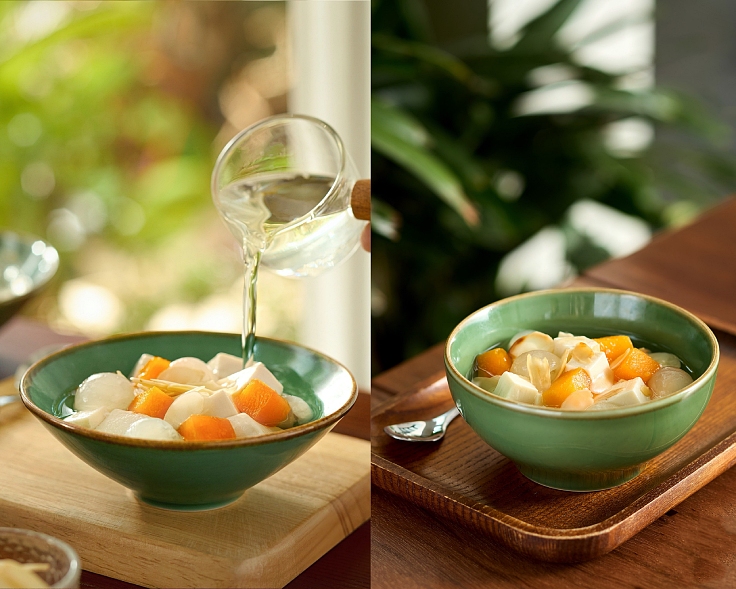
This refreshing treat is a modern Vietnamese twist on almond tofu, believed to have originated within the Chinese community in Ho Chi Minh City.Chef Lo Vo Bao Lam of Madame Lân in Da Nang explains: “Unlike traditional tofu made from soybeans, the jelly in che khuc bach has a soft, slightly chewy texture and a creamy richness from fresh milk. Once set, it’s cut into checkerboard-like cubes, each carrying a light hint of cheese. The best cubes should have a smooth surface and a gentle bounce.”
The sweet soup is made from rock sugar and syrup from lychees or longans, with fresh or canned fruit — most often lychee or longan — added alongside slivered almonds to create contrast in both flavor and texture. Served chilled, che khuc bach is a perfect antidote to Vietnam’s tropical heat.
“With its cooling and soothing qualities, che khuc bach is a wholesome treat, capturing the Vietnamese culinary philosophy of harmony and balance,” Chef Lam adds.
Ready to fall for che khuc bach? Madame Lân is the place.
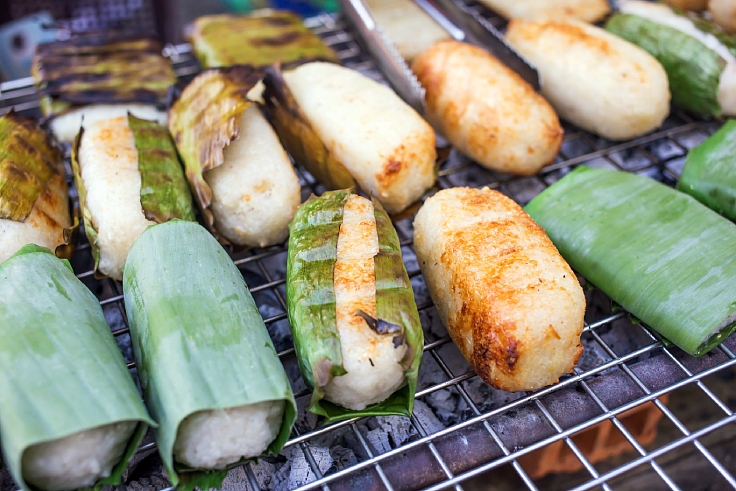
Charcoal-Grilled Wax Banana
While the ingredients of chuoi nep nuong are simple — ripe Vietnamese bananas, fragrant sticky rice, coconut milk and a sprinkle of roasted peanuts — the preparation of this dessert is surprisingly elaborate.First, the sticky rice is cooked. Then each peeled banana is wrapped in the rice and grilled over hot coals until the outer layer turns golden and crispy, releasing a smoky aroma.
Once grilled, the banana is sliced into bite-sized pieces, drizzled with warm coconut milk and topped with crushed peanuts. The result is a delicious harmony of textures and flavors — the natural sweetness of the banana, the creamy richness of the coconut milk and the satisfying chew of sticky rice.
This dessert is especially comforting on chilly days. You can find it at Luk Lak.