07 January 2026


Share


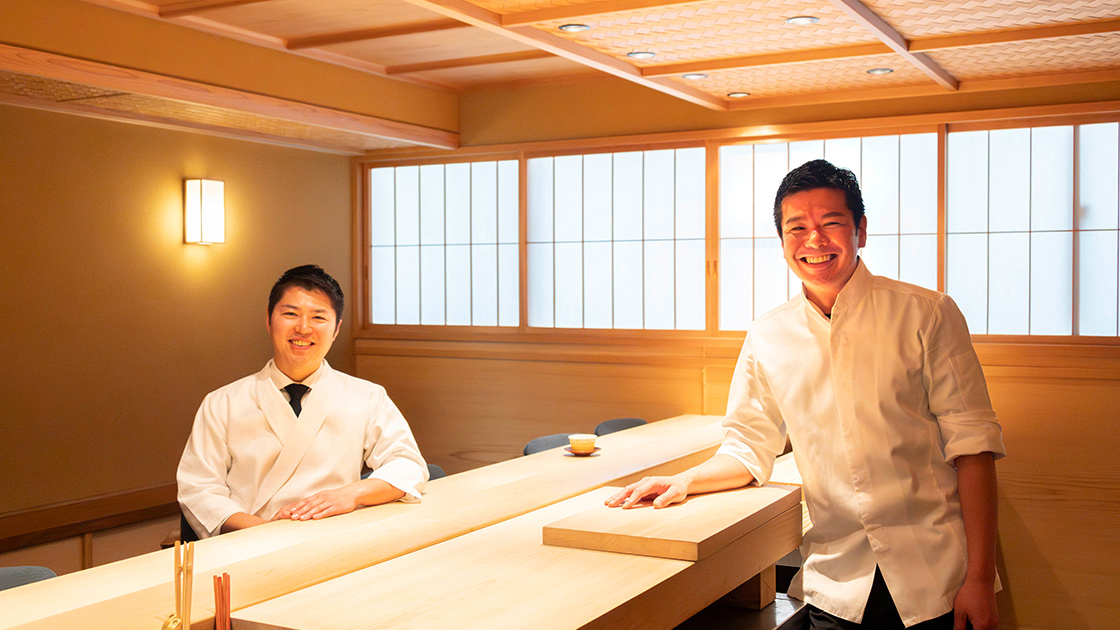
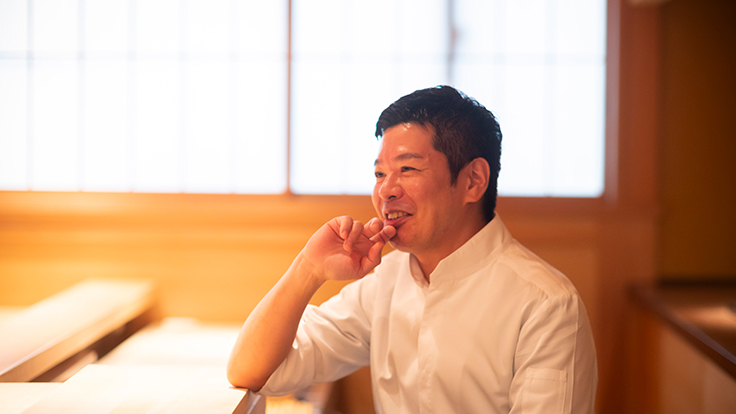
The Japanese restaurants Ensui and Hakuun both opened their doors in the same winter at the height of the COVID-19 pandemic. Within their first year, both were awarded One MICHELIN Star in The MICHELIN Guide Tokyo 2022, and four years later they stand together again as Two-MICHELIN-Star restaurants in The MICHELIN Guide Tokyo 2026. Having trained side by side at Nihonryori RyuGin, Ryosuke Ito of Ensui and Shingo Sakamoto of Hakuun take a moment to trace the paths that led them here.
Sakamoto joined RyuGin first, as a cook, while Ito began as a sommelier. In time, both would find their place behind the counter, working shoulder to shoulder in the kitchen.
“I started about two years before Ito-san, but once he moved into the kitchen, he just shot up through the ranks,” says Sakamoto. “Whatever task he was given, he handled it with ease.”
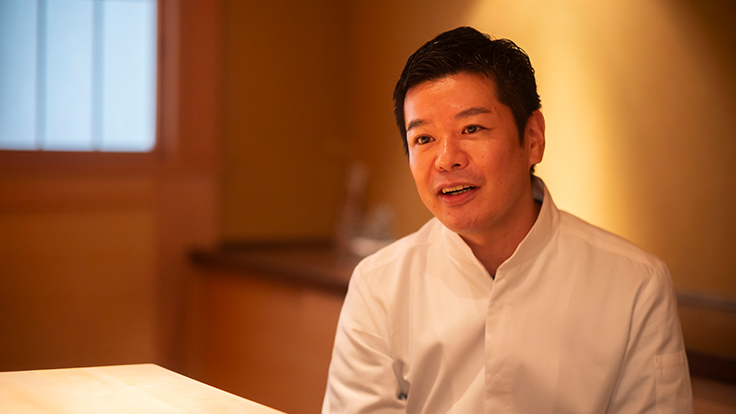
Ito remembers that support fondly. “Sakamoto-san is exceptionally skilled with fish, and it was he who opened the door for me to join the kitchen,” he says.
At RyuGin, challenges came without warning. Each time an opportunity appeared, Ito stepped up, expanding his role. They still smile when they recall what they came to call the “akamutsu test,” where the goal was perfectly grilling the restaurant’s prized rosy seabass.
“Even when I was being yelled at, Sakamoto-san would come to my defense or work with me to find a solution,” says Ito. “I may be a year older, but I’ve always respected him.”
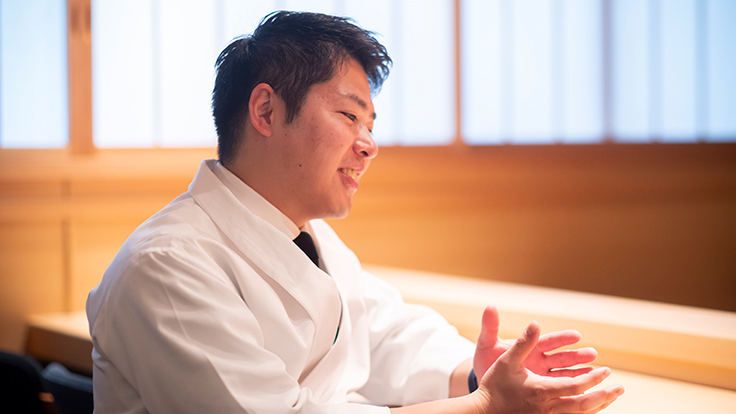
“Ito-san is so good he didn’t actually make that many mistakes,” Sakamoto adds. Behind that simple phrase lies the quiet trust between two people who know each other’s strengths and character inside out.
At the time, RyuGin’s kitchen was home to a generation of chefs who would later go on to shape fine dining across Asia. Among them were Ryohei Hieda of Eika in Taipei, Hideaki Sato of Ta Vie in Hong Kong and Tomoya Kawada of Sazenka in Tokyo, each of whom regards time spent under RyuGin’s owner-chef Seiji Yamamoto as an enduring asset.
Ito recalls, “Many of my senior chefs from those days now hold two or more MICHELIN Stars. We were all driven by the hope of catching up with Chef Yamamoto and one day surpassing him. To my mind, that feeling was what propelled us forward.”
In time, Sakamoto became head chef and Ito sous chef, together anchoring the kitchen’s daily operations. They credit their learning not only to the ingredients they worked with every day but also to observing Yamamoto’s own approach in the kitchen.
Sakamoto says, “The way I look at ingredients is shaped largely by him. He constantly challenged fixed ideas and pushed us to find new ways of thinking. By overcoming setbacks again and again, I learned how to turn negatives into positives. I want to pass what I’ve learned from him on to the next generation.”
Ito builds on that, highlighting how the lessons shaped his own approach. “Understanding what guests and producers are seeking — and what we can offer them at our very best — is the mindset I learned at RyuGin, and it still underpins how I train my team today,” he says.
Even the video shoots they did together after hours, though unusual at the time, proved to be formative experiences. Watching their chef engage so earnestly with his craft while sharing his ideas and techniques with the wider world, they felt that they too were part of that effort. Those experiences continue to shape how they present their own cuisine today.
After their years at RyuGin, they each made the decision to strike out alone and began preparing to open their own establishments. By coincidence, they both opened their restaurants in the same winter. Japan was in a state of emergency due to COVID-19, and securing properties and fitting out kitchens was an almost impossible struggle. As the challenges mounted, they kept in touch, checking in on one another and sharing information.
Ito says, “There was a real sense that we were fighting side by side back then, though of course we each had our situation to face.”
The name “Ensui” translates to “flame and water,” reflecting the restaurant’s focus on the fire of charcoal grilling and the water used to draw the delicate flavors of dashi stock. It speaks to what Ito sees as the wellsprings of Japanese cuisine, and to the years he spent faithfully tending the grill and the stove during his training.
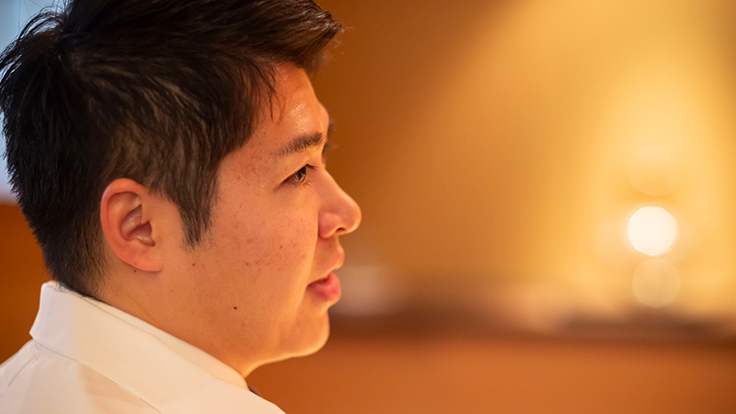
Sakamoto’s restaurant name, “Hakuun,” is inspired by a Zen couplet that pairs the stability of a mountain with the flexibility of drifting clouds. The mountain represents the enduring tradition of Japanese cuisine, while the clouds symbolize an open, adaptable mind. By substituting the character for “white” with one meaning “elder brother,” Sakamoto expresses both his flexible approach and his pride in being his mentor’s top pupil. The name also nods to RyuGin, whose name evokes clouds rising with the dragon, highlighting Sakamoto’s ambition to follow in those footsteps.
Though Sakamoto and Ito now stood at separate counters, their paths were about to converge once more. Less than a year after opening, both restaurants were recognized with One MICHELIN Star in The MICHELIN Guide Tokyo 2022.
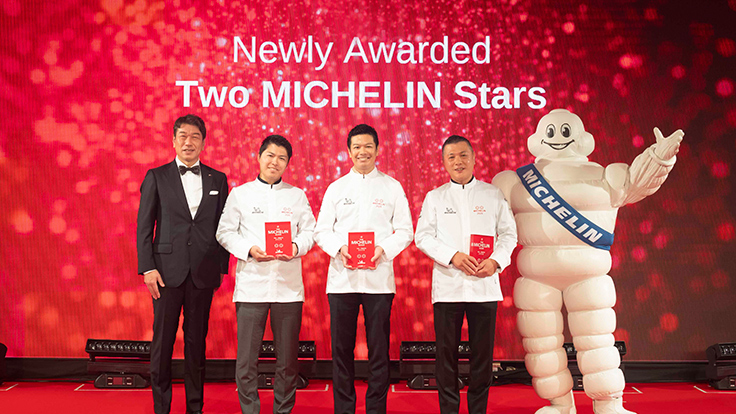
A few years later in September 2025, they would once again find themselves heading to that same stage at the ceremony for The MICHELIN Guide Tokyo 2026. As the Two-Star category began, the atmosphere in the hall grew tense.
The first name called was the Japanese restaurant Ensui. Sakamoto remembers a sudden flicker of annoyance as he watched Ito head to the wings, as he never dreamed that his own name would follow.
When Hakuun was announced seconds later, Ito was filled with as much joy as if it had been him. Just before stepping onto the stage, the two chefs caught each other’s eye and broke into spontaneous smiles.
From sharing their first Stars in their opening year to now standing side by side helming Two-MICHELIN-Star restaurants, the moment felt symbolic to both.
After several years of independence, their identities as chefs have only grown more sharply defined.
For Sakamoto, the starting point is to draw out the power of each ingredient as simply and directly as possible.
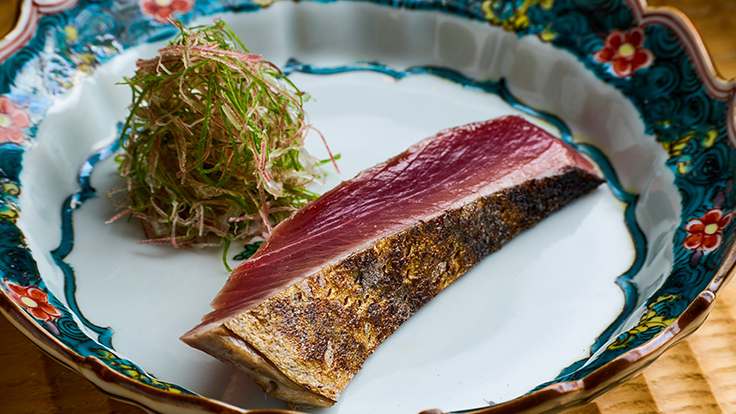
“I want to create dishes that move people through the pure appeal of the ingredients,” says Sakamoto. “Katsuo no shio tataki (seared bonito) may be something people are used to eating, but I hope they’ll be surprised by just how different the flavor and texture can be.”
The katsuo, or bonito, is smoked over straw and left to rest, then seasoned with salt and pepper. The ability to sear it quickly over intensely hot charcoal is a skill built up over many years at the grill.
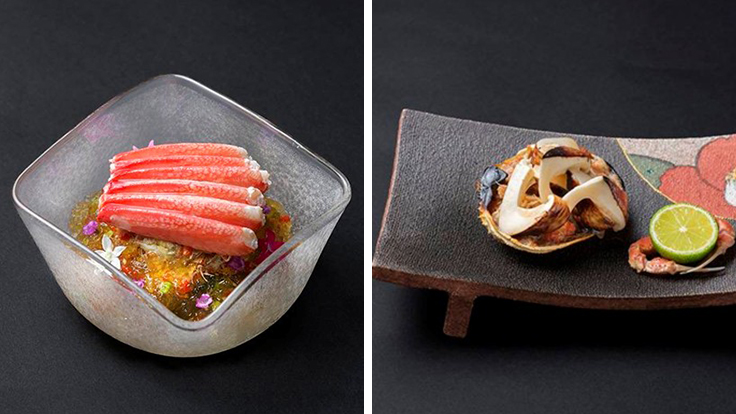
By contrast, Ito is intent on revealing the many faces of each ingredient. His philosophy comes into focus in a seasonal dish served when snow crab is at its peak: Tottori sekogani (snow crab) served chilled, warm and with crab-shell sake presents the female snow crab in three distinct forms.
“With sekogani, I don’t think a single way of cooking it can do it justice so we build the course in a way that lets guests fully appreciate the flavor of each part. The roasted aroma of the shell is also part of the treat. We grill the inside of the shell, spoon in steamed rice, add both types of roe and the crab flesh, then finish with a glossy crab sauce. Finally, we pour hot hirezake (fish fin steeped in sake) into the emptied shell, inviting guests to savor the lingering essence of the crab alongside artfully arranged thinly sliced fugu (pufferfish) sashimi.”
The sweetness of the flesh, the richness of the creamy uchiko roe, the pop of the crunchy sotoko roe and the toasty aroma of the grilled shell are all expressed through the progression of chilled and warm dishes, followed by the crab-shell sake, leaving nothing of the crab unexplored.
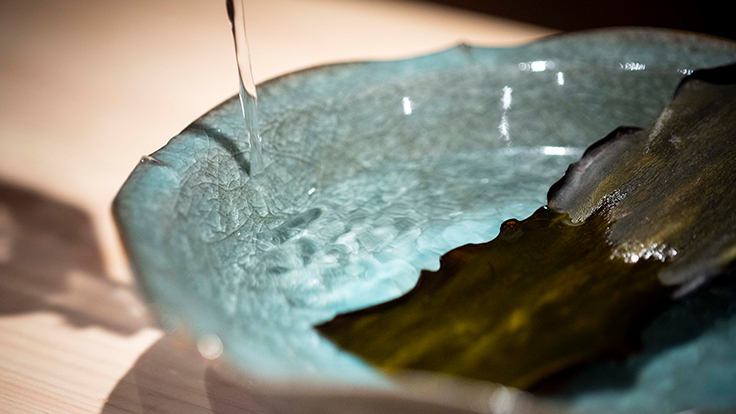
Before opening Ensui, Ito traveled across Japan in search of the right water to pair with his kombu, eventually settling on water from Kagoshima. Sakamoto joined him on that journey, and today both restaurants use the same source.
Sakamoto says, “I’m always struck by Ito-san’s curiosity and drive. In his attitude and in the way he talks, you can feel how he’s inherited Chef Yamamoto’s spirituality and way of thinking.”
Ito is equally complimentary. “Sakamoto-san has a distinctive eye for plating, for choosing vessels, for how he interprets ingredients,” he says. “Even in something as simple as how he reveals what’s inside with a single cut, there’s an immediacy that really inspires me.”
Both chefs hope more young people will choose the path of Japanese cuisine in the future, and they see it as their responsibility to lead the way.
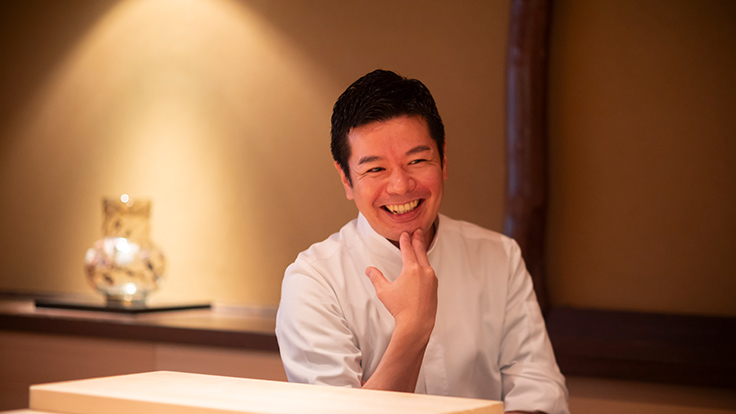
Sakamoto continues to delve into the classics while refining them with contemporary techniques, pursuing dishes that make guests feel they are tasting something totally new right from the first bite.
Ito, meanwhile, believes that having clear goals, like MICHELIN Stars, can lift the industry as a whole, and hopes to lead younger chefs by example.
Sakamoto says, “We have to be the kind of chefs who make young cooks want to pursue Japanese cuisine when they see us. I want to strengthen the foundations of this restaurant and, one day, take on the challenge of working overseas as well.”
Ito also has his sights set further afield. “Many of the challenges producers face can’t be solved locally,” he says. "First, I want us to carefully identify the issues and work with our colleagues to bring them into focus.”
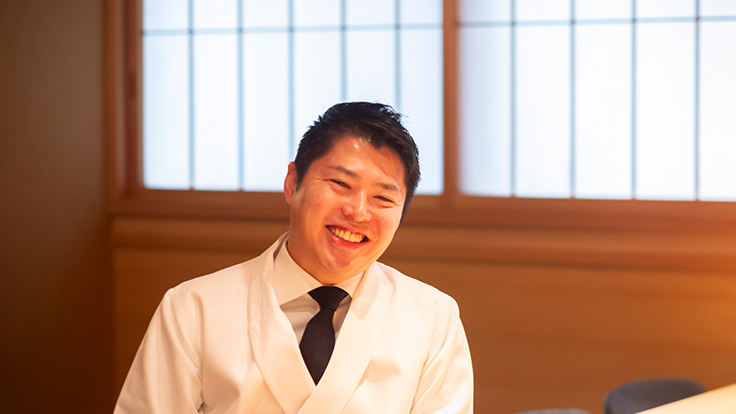
From their shared history, it becomes clear that their parallel journeys reflect more than coincidence. Both trace their philosophy back to RyuGin: their approach to ingredients, resilience and deliberate thinking all stem from lessons under Chef Seiji Yamamoto.
While respecting each other's individuality, they agree that "the years we spent following in our mentor's footsteps are what give us strength today." Carrying that foundation, they continue shaping the future of Japanese cuisine on their own distinct paths.
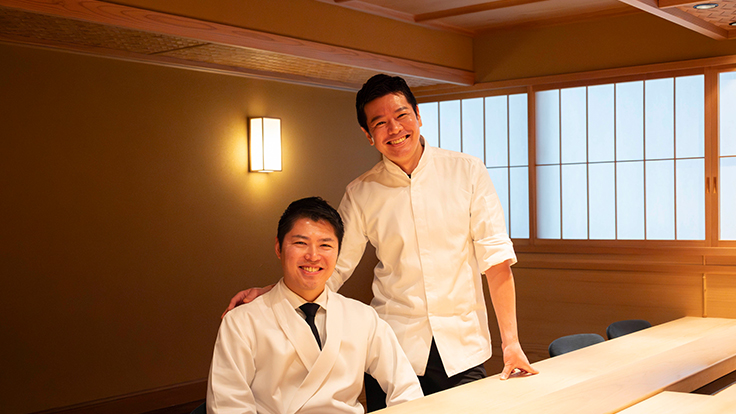
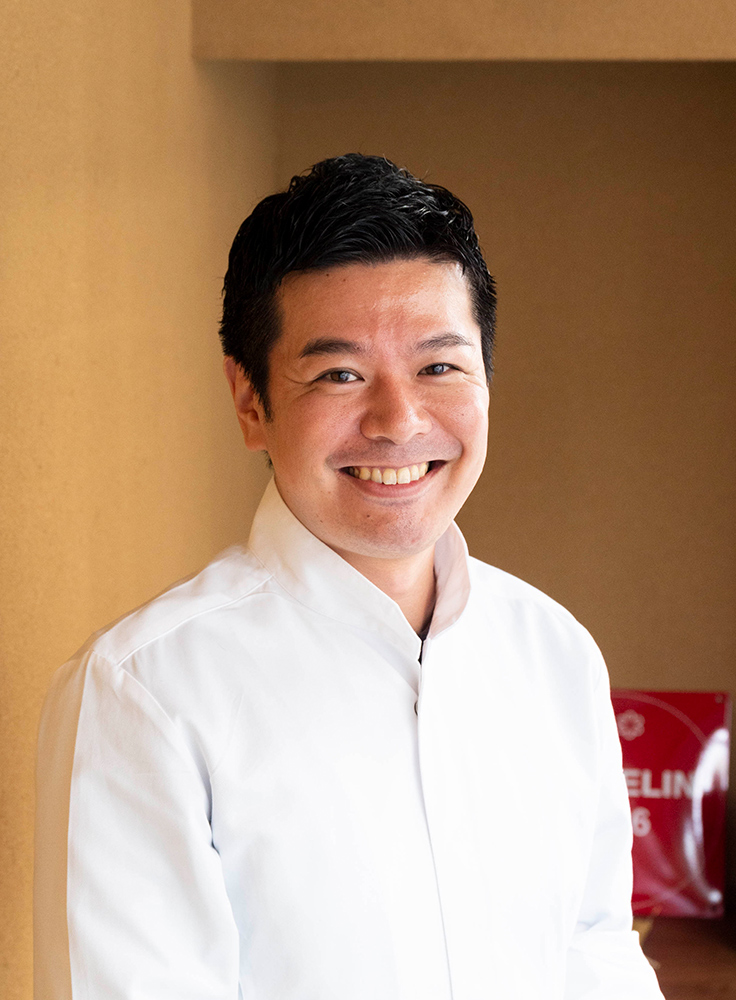
Owner-chef: Shingo Sakamoto
Born in Hino, Tokyo
- Graduated from Tsuji Culinary Institute in 2004
- Started at Nihonryori RyuGin in December 2007
- Opened Hakuun in January 2021
- Awarded his first MICHELIN Star in The MICHELIN Guide Tokyo 2022 (November 2021)
- Elevated to Two MICHELIN Stars in The MICHELIN Guide Tokyo 2026 (September 2025)
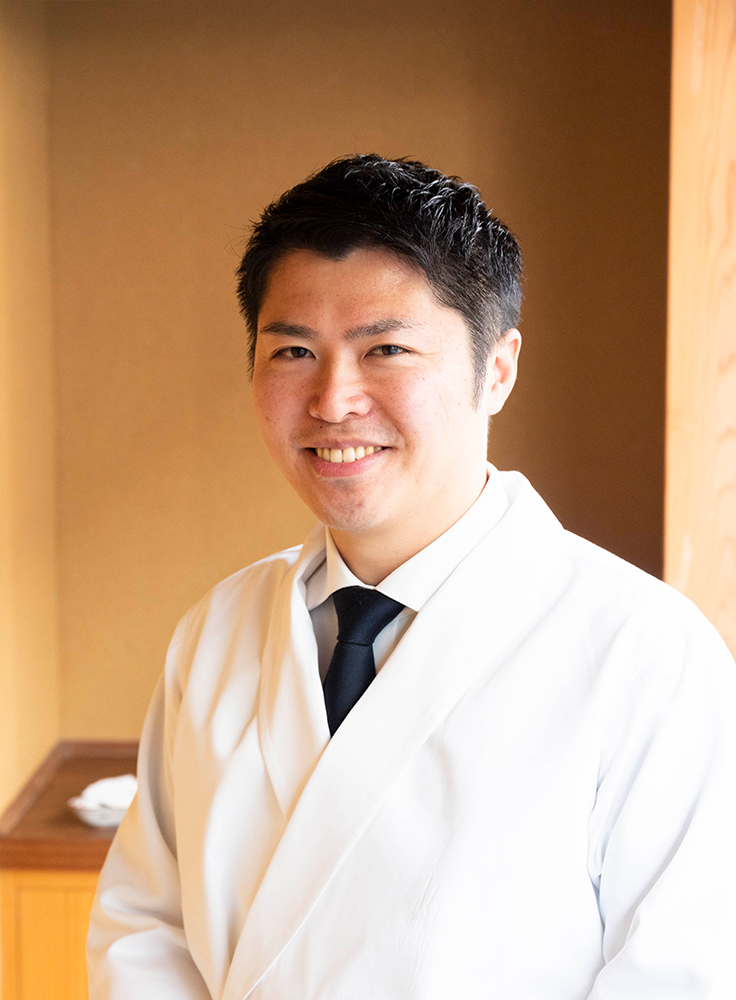
Owner-chef: Ryosuke Ito
Born in Sapporo, Hokkaido
- Started at Nihonryori RyuGin in October 2010
- Opened Ensui in December 2020
- Awarded his first MICHELIN Star in The MICHELIN Guide Tokyo 2022 (November 2021)
- Elevated to Two MICHELIN Stars in The MICHELIN Guide Tokyo 2026 (September 2025)
Hero image, Portrait: © Hisashi Yoshino / The MICHELIN