24 December 2025

Share


Non-alcoholic (NA) beverages are no longer defined by what they lack. In fine dining today, bottled teas are emerging as a distinct category in their own right — designed, curated, and served with the same intent once reserved for wine.
According to global market research firm IWSR, the NA industry is projected to grow at an average annual rate of 7% through 2028, surpassing $4 billion in value. This shift is increasingly visible at the highest levels of gastronomy, where bottled teas are appearing across MICHELIN-recognized addresses in Asia and the Middle East — positioned alongside wine.
Here, The MICHELIN Guide explores how bottled teas are redefining non-alcoholic dining, spotlighting the producers shaping the category — and the sommeliers and tastemakers embracing them.
A new alcohol-free language
In markets where alcohol is permitted but regulated, NA beverages are increasingly treated as a distinct craft category rather than a compromise. At Avatāra, a One-MICHELIN-Starred Indian restaurant in Dubai, restaurant manager Sumit Sharma views this environment “not as a limitation, but an invitation to elevate the possibilities of non-alcoholic craftsmanship.”
“More of our guests are asking for zero-proof options that feel just as intentional and festive as an alcoholic wine or Champagne,” Sharma says. He has observed “a notable increase in interest and sophistication around non-alcoholic celebratory beverages” in recent years, alongside double-digit growth for premium NA drinks in the UAE hospitality sector.
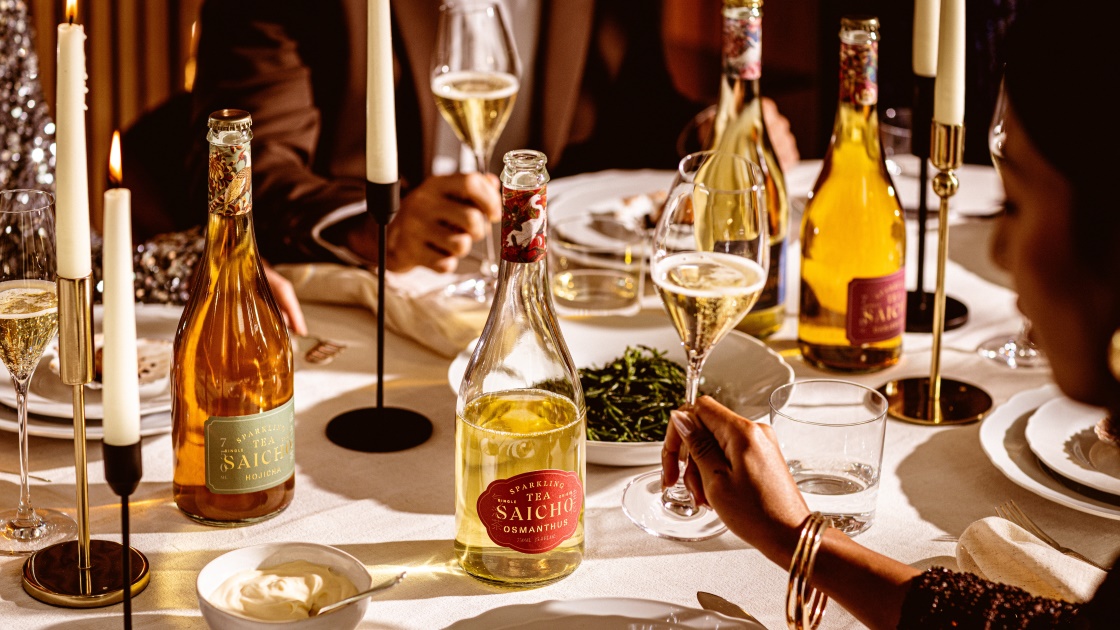
At Avatāra, this has reshaped how beverages are approached at the table. In a vegetarian context, Sharma notes, NA pairings play a central role in creating balance, texture, and aromatic lift — alongside premium bottled options such as Sangre de Toro and French Bloom.
READ MORE: Your Guide to Non-Alcoholic Beverage Pairings in Dubai
Sparkling tea has emerged as one of the most visible categories reshaping the role of NA beverages at the table. Saicho, a UK-based sparkling tea brand with a Hong Kong sensibility, is served at over 100 MICHELIN-Starred restaurants across more than 20 countries.
“What we’re witnessing globally is a clear shift in how premium non-alcoholic drinks are perceived and positioned,” says Emma Walker-Hedges, head of marketing at Saicho. “Sparkling tea is being embraced not as a substitute, but as a sophisticated category in its own right — worthy of the same consideration as fine wine in pairing menus.”
She notes that South Korea has emerged as a particularly dynamic market for this movement, with Saicho now offered in a growing number of establishments.
Bespoke collaborations at the table
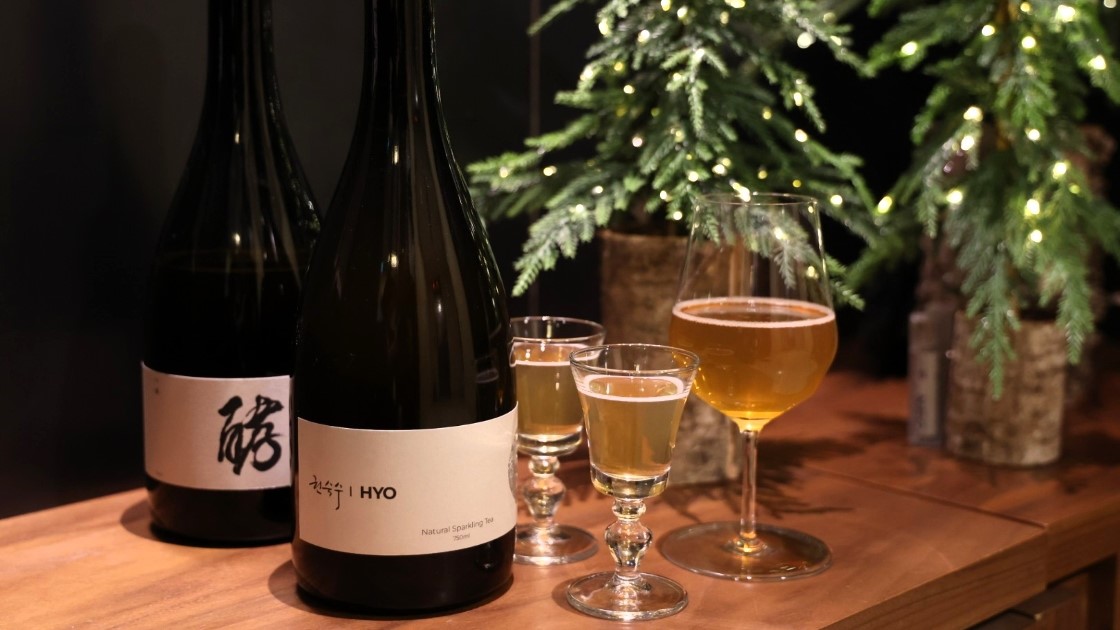
In Seoul, Two-MICHELIN-Starred Kwonsooksoo partnered with local sparkling tea brand HYO House to develop seasonal, limited-edition NA offerings. Launched in August, their first collaboration, Cheongrim Yuun (靑林流韻), is a sparkling green tea with a creamy texture.“Fine dining is about the experience as much as the food, and beverages play a crucial role,” says head sommelier Lee Seung-joo, who led the project. He notes that fermentation — central to Kwonsooksoo's cuisine — made HYO House, which works with its own naturally cultivated yeast, a natural partner. Chef Kwon Woo-joong describes the project as a small but deliberate gesture intended to create “a wider ripple within the fine-dining scene” — a ripple that saw Cheongrim Yuun sell out faster than expected, with further seasonal releases already in development.
According to Nick Shin, CEO and head brewer of HYO House, the project has since drawn interest from other MICHELIN-Starred restaurants seeking bespoke collaborations. The brand's sparkling teas are currently served in numerous MICHELIN-recognized destinations across Korea, including Mingles (Three Stars), Jungsik (Two Stars) and Park Hyatt Seoul (MICHELIN Selected).
The shift extends beyond the hospitality scene: during the 2025 APEC Summit held in Korea in October, heads of state toasted with HYO House’s signature blue tea — an understated reflection of how non-alcoholic beverages are increasingly incorporated into moments of ceremony and protocol.
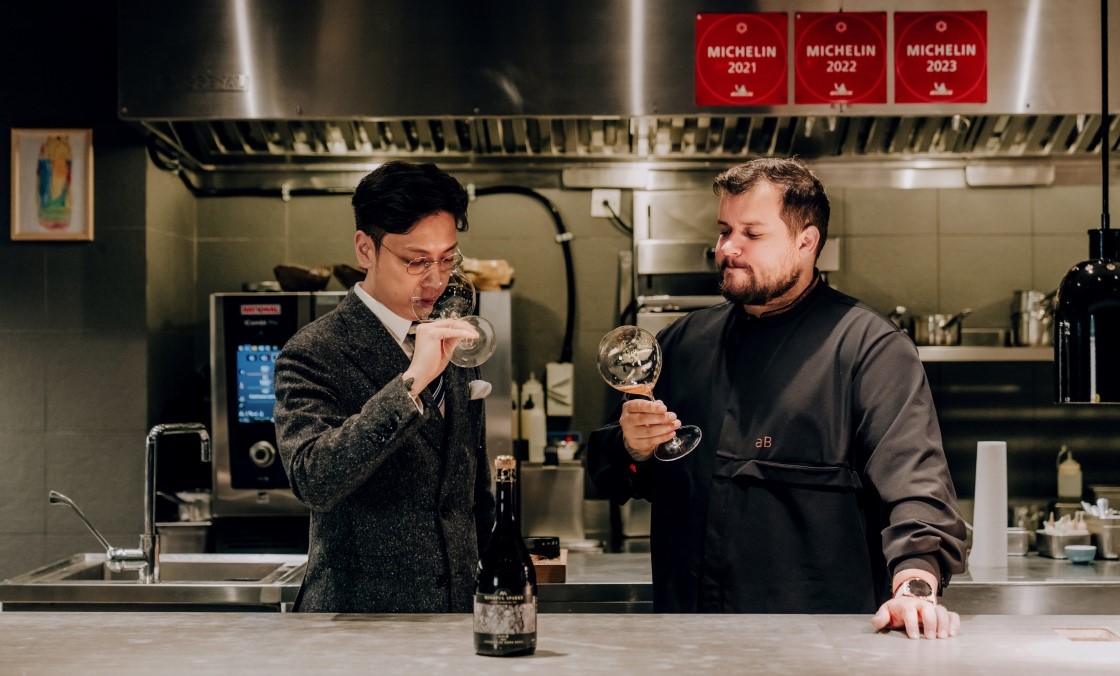
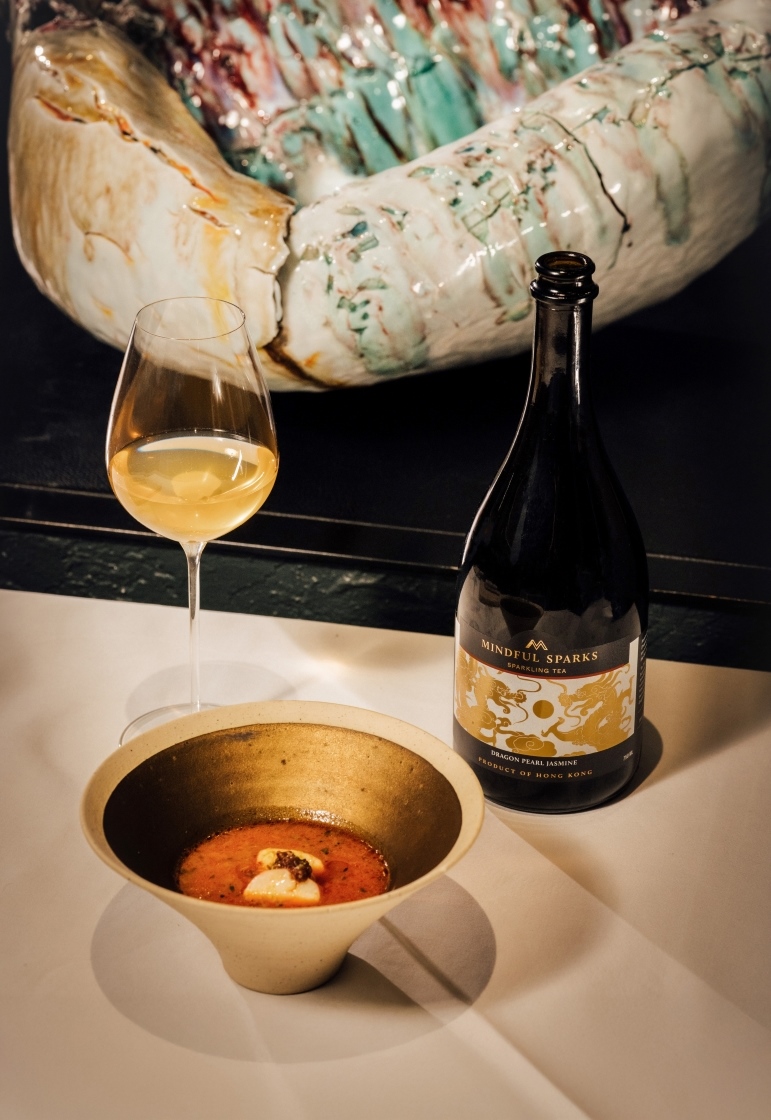
Another notable limited-edition collaboration comes from Hong Kong, where One-MICHELIN-Starred Andō partnered with Mindful Sparks for a sparkling tea incorporating mate tea, a nod to Chef Agustin Balbi’s South American heritage.
“At Andō, non-alcoholic pairings have become an essential component of our overall beverage philosophy,” says Carlito Chiu, general manager and wine director of the restaurant. He notes a growing demand among diners in Hong Kong’s fine-dining scene for more sophisticated non-alcoholic options.
“Diners are becoming more health-conscious and are actively seeking refined alternatives that still offer a luxurious experience. This has encouraged us to innovate further, ensuring that our non-alcoholic pairings are not merely an afterthought, but a celebrated aspect of the dining experience,” he says. Both Chiu and Balbi now serve as brand ambassadors for Mindful Sparks. The tea brand was also an official partner of the 2024 MICHELIN Guide Ceremony Hong Kong & Macau.
READ MORE: Sip Sans Spirits: 9 Malaysian Restaurants Elevating Non-Alcoholic Pairings
When tea is bottled like wine
In Japan, the wine-bottle aesthetic of premium tea has taken an even more literal form. Royal Blue Tea presents hand-picked teas ranging from green tea to hojicha and is offered at MICHELIN-recognized establishments such as Palace Hotel Tokyo (Three Keys) and Gion Sasaki in Kyoto (Three Stars). Among its most exclusive releases was King of Green KIYOHARU, produced in extremely limited quantities and priced as high as ¥1,080,000 (almost $6,900).
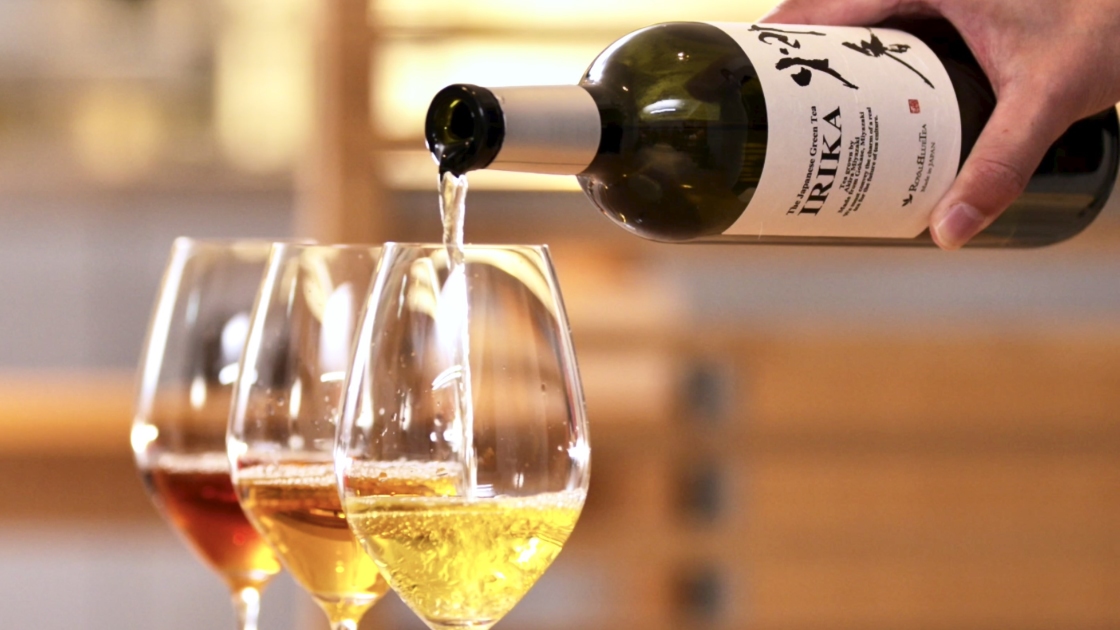
At Aman Kyoto, bottled tea offerings such as Royal Blue Tea further illustrate Japan’s evolving NA landscape. Interest in NA drinks increased during the COVID-19 pandemic, notes Daisuke Sasaki, beverage manager and chief sommelier at the Two-MICHELIN-Key hotel. While demand has since normalized, offering thoughtful NA experiences remains important.
“We embrace these [NA pairing] requests as a chance to craft experiences that feel personal and intentional,” says Sasaki. “This approach allows us to focus on quality and customization, creating experiences that embody Kyoto’s understated, deeply personal dining culture.”
READ MORE: Kyoto’s Great Hotels and the Art of the Garden
Tea is a remarkably sensitive medium. In gastronomy, this variability makes carefully bottled teas compelling: tightly controlled flavor profiles allow chefs and sommeliers to approach tea with the same precision as wine pairing.
“Using a standard 750ml wine bottle allows us to preserve the tea’s character without additives, while making it easy to serve at the table,” says Setsuo Sato, founder and CEO of Royal Blue Tea. “It removes the variables of brewing and allows the focus to remain on the pairing experience.”
To preserve the integrity of the tea, Royal Blue Tea uses a proprietary, non-heated, additive-free process combining filtration sterilization with aseptic filling. Water selection is treated with equal care: the limited Mishima edition of Queen of Blue Deluxe, for example, was extracted using the famously pure underground waters of Mishima, fed by Mount Fuji.
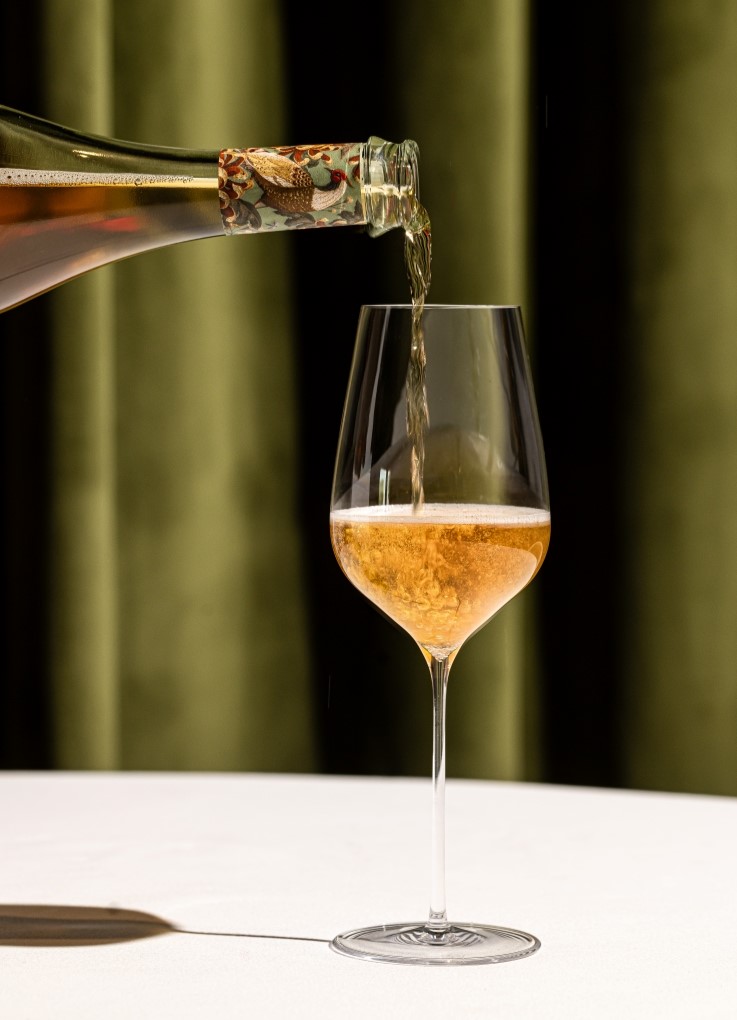
Other producers introduce carbonation to create structure and tension more commonly associated with sparkling wine. Saicho’s founders, food scientists Charlie and Natalie Winkworth-Smith, rely on cold brewing — a process designed to enhance aromatics while softening astringency — before delicately carbonating the tea to create a balanced, layered profile suitable for pairing.
Mindful Sparks uses a proprietary “Layer 6 Extraction” method to maximize flavor and texture, a process recognized by researchers at the University of Hong Kong for its high polyphenol extraction capacity.
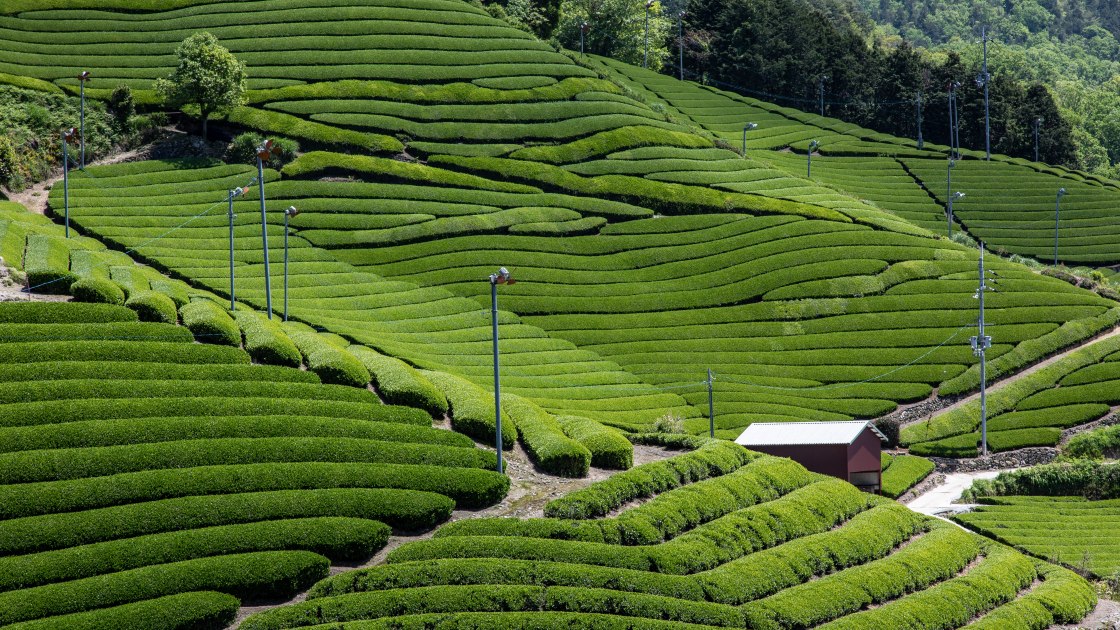
Tea through a winemaking lens
HYO House also works with single-origin teas, but takes a fundamentally different approach, treating fermentation as a core design principle rather than a functional step. The brand uses a starter culture developed through research at the Seongnam Industry Promotion Agency’s food R&D center, drawing on indigenous yeast and probiotics studied for their suitability to Korean gut health, including those found in kimchi, vinegar and breast milk.“Many non-alcoholic drinks simply remove alcohol or rely on juice-based additives,” explains Shin. “But many consumers turn to non-alcoholic options because they once enjoyed drinking alcohol and are now seeking an alternative. To truly replace that experience, non-alcoholic beverages need comparable depth of flavor and aroma — and they must pair well with food. That’s why fermentation is essential.”
The brewer frequently draws parallels between tea and wine, underscoring his ambition to position HYO House as an alternative to wine — particularly Champagne. “Wine is categorized by grape variety and terroir, and tea works the same way,” he notes. “Our brand history may be short, but tea itself has a long heritage, and I believe it has every potential to evolve much like wine.”
In that sense, tea — once brewed quietly at home — is now being reimagined as a bottle worthy of celebration, standing confidently in moments long reserved for Champagne.
READ MORE: Légume: Asia’s First-Ever MICHELIN-Starred Vegan Restaurant
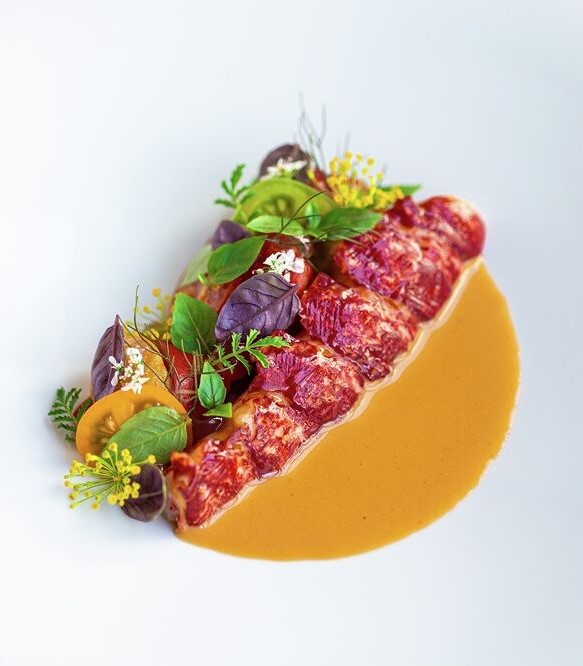
Hero image: HYO House’s sparkling oolong tea and Cheongrim Yuun paired with Kwonsooksoo’s winter menu, including Korean raw beef with oyster mushrooms and a winter seafood porridge capturing the aromas of the cold sea. © Choi Youjin / Kwonsooksoo