07 January 2026

Share


The Land of Smiles is no empty tagline. With an innate sense of graciousness and a natural flair for service, it comes as no surprise that hospitality is a field in which Thais truly excel. Here, hospitality is not merely a profession but part of the cultural fabric — one that has helped position Thailand as a powerhouse in the global luxury hotel landscape.
In 2025, Thailand became one of the leading countries in Asia, alongside Japan, to receive the highest number of MICHELIN Keys, with 62 properties recognized for delivering exceptional experiences.
Today, Thailand’s homegrown visionary brands are making waves around the world. They are more than just hotels — they are ambassadors of Thai excellence, where an instinct for warm hospitality and a flair for design translate into contemporary luxury experiences that captivate guests across continents.
Understanding which local names have earned their stellar reputations can help you decide where to stay, whether in Bangkok or beyond. Here, we spotlight four Thai-born hotel brands that have mastered the art of creating unforgettable stays.
Dusit Thani
An instant icon when it debuted in the 1970s, Dusit Thani Bangkok, a One-MICHELIN-Key property in the MICHELIN Guide 2025, was founded by Lady Chanut Piyaoui, who believed deeply in Thailand’s potential as a global tourism destination. She elevated Thai hospitality to international standards, setting a benchmark that would shape the industry for decades. Her vision extended beyond hotels: in 1993, she founded Dusit Thani College to nurture future leaders in hospitality and culinary arts.For generations, seaside holidaymakers and high-society lunchers alike have trusted the Dusit name for reliable service and refined comfort. Today, the group’s portfolio spans more than 300 properties under eight brands across 19 countries — a testament to a legacy that continues to travel well.
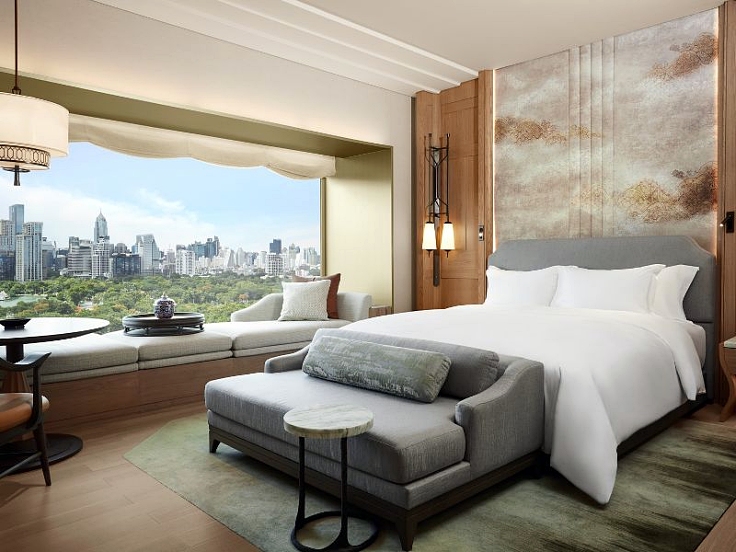
Where to stay
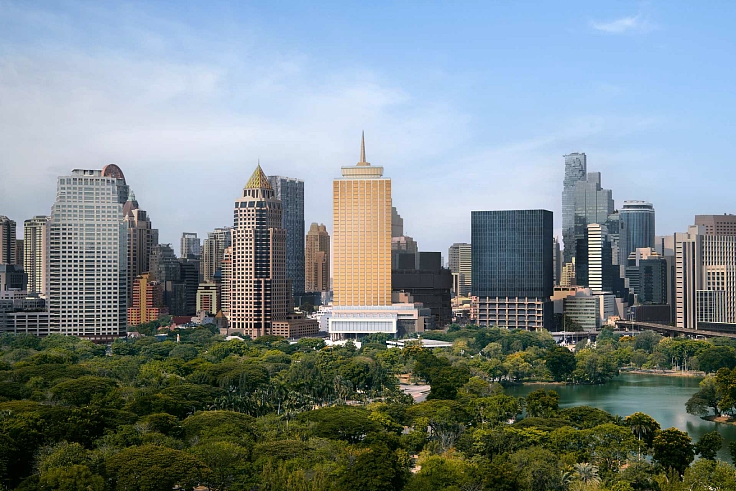
While Dusit Thani Kyoto made history as the first Thai hotel to receive a MICHELIN Key — earning the distinction upon its debut in the MICHELIN Guide 2025 and underscoring the brand’s growing global presence and design-led ambition — the story began in Bangkok. The flagship Dusit Thani Bangkok was once the city’s tallest building, instantly recognizable by its golden spire. Though the beloved landmark was dismantled just before the pandemic, it has since returned, reimagined and reborn in a striking new form that now holds One MICHELIN Key.Blending modernity with relaxed luxury, the hotel distills traditional Thainess into refined details, from custom-designed lamps and headboards to cabinetry accented in celadon green. Sweeping views of Lumpini Park — whether from a suite or the ballroom — steal the show, while Cannubi by Umberto Bombana, awarded One MICHELIN Star in The MICHELIN Guide Thailand 2026 edition, serves beautifully plated Italian cuisine beneath a dramatic nine-tiered waterfall, a graceful nod to the hotel’s golden-era grandeur.
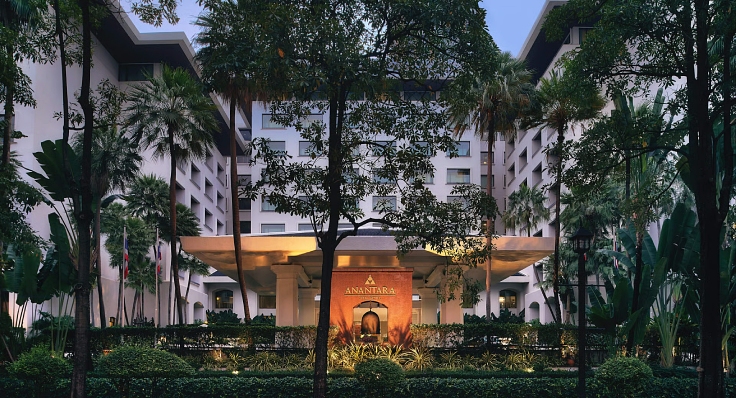
Anantara
With more than 50 properties across Asia, the Indian Ocean, the Middle East, Africa, Europe and South America, Anantara stands out as one of the few Thai hotel brands with a truly global footprint, while many of its peers remain largely regional. Backed by the robust corporate infrastructure of its parent company, Minor International — a major player across hospitality, dining and lifestyle retail — the brand operates on a distinctly international scale.Since opening its first resort in the seaside town of Hua Hin in 2001, Anantara has become synonymous with refined Thai aesthetics and luxury. In recent years, however, the brand has evolved toward a more contemporary and pared-back sensibility, while staying rooted in its Thai DNA. With a focus on experiential luxury, Anantara curates immersive cultural encounters and memorable settings — from tented retreats overlooking roaming elephants in northern Thailand to far-flung destinations designed for slow, meaningful travel.
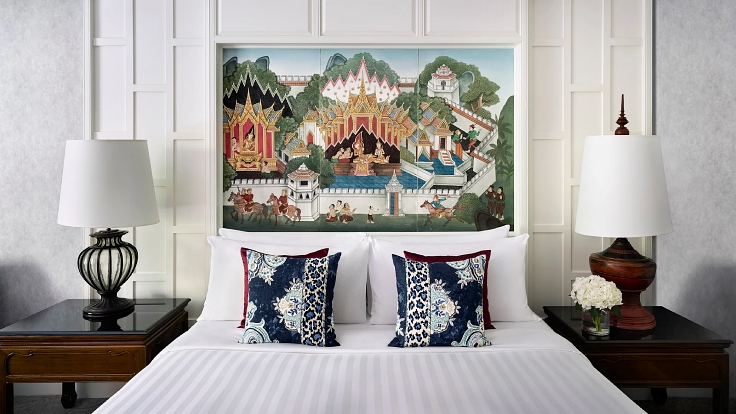
Where to stay
Anantara’s MICHELIN Key properties showcase the brand at its most expressive. From the flagship Anantara Siam Bangkok Hotel to the founding Anantara Hua Hin Resort & Spa, each dazzles with a distinct sense of Thai flair. In Hua Hin, gabled orange roofs and lotus-filled ponds set the scene for a serene seaside escape rooted in tradition.In Bangkok, guests are greeted by a striking 100-square-meter hand-painted silk mural by Paiboon Suwannakudt, depicting the coronation of King Rama I in exquisite detail — an artwork that immediately commands attention with its scale and craftsmanship.
For those seeking drama in nature, the Two MICHELIN Key–awarded Anantara Golden Triangle Elephant Camp & Resort in Chiang Rai offers mountainside bathtubs built for two and transparent bubble tents, placing guests astonishingly close to roaming elephants and star-filled velvet skies.
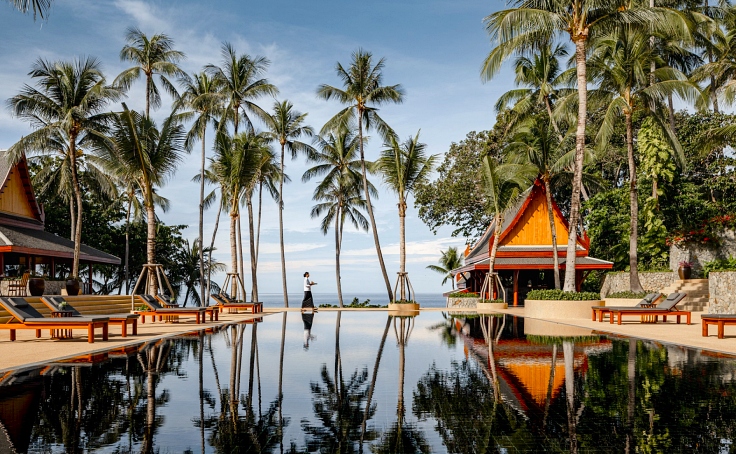
Aman
Dreams of otherworldly escapes and absolute privacy often begin with Aman. From waking to the stillness of luminous canyons to sipping tea with views of ancient summer palaces, the brand has become synonymous with serenity. Its understated architecture blends seamlessly into remote landscapes and UNESCO-protected sites, while culturally rich experiences, unspoiled nature and refined hospitality define its ethos.Amanpuri, the ultra-luxury founding property, opened in Phuket in 1988 with a vision by Adrian Zecha to create a private holiday retreat. What began as a personal dream soon evolved into a pioneering boutique resort, developed with Anil Thadani and two close partners. With no bank willing to finance such a small-scale concept, the founders invested their own funds — a bold move that ultimately set the blueprint for Aman’s global portfolio of intimate, deeply private sanctuaries.
Where to stay
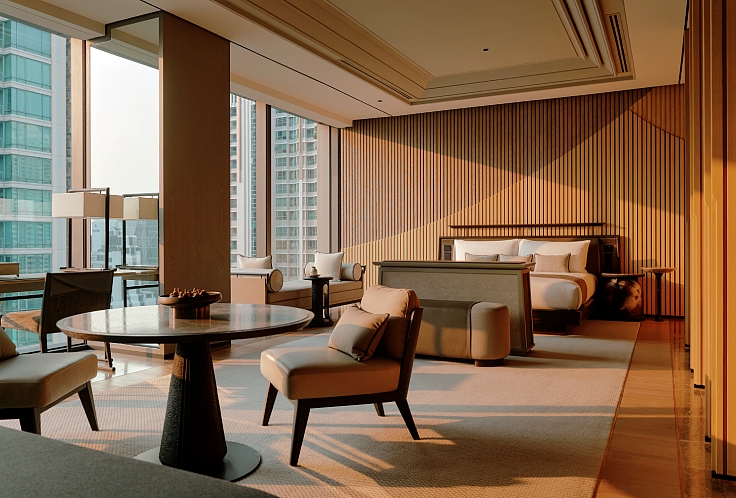
Amanpuri lives up to its legend with Three MICHELIN Keys in the inaugural MICHELIN Key selection of 2024. For a more contemporary interpretation — and a symbolic homecoming — Aman Nai Lert Bangkok offers a fresh chapter for the brand. Opened in 2025, the property has already earned Two MICHELIN Keys in the 2025 edition, thanks to its generously proportioned suites, state-of-the-art wellness facilities and service that is attentive yet never intrusive.One of its most exclusive privileges is access to Nai Lert Park Heritage Home, the property owner’s century-old Thai residence turned living museum. Once a gathering place for dignitaries — including the Emperor of Japan — it now offers guests the rare opportunity to dine within its storied walls, where history and haute hospitality quietly converge.
Mandarin Oriental
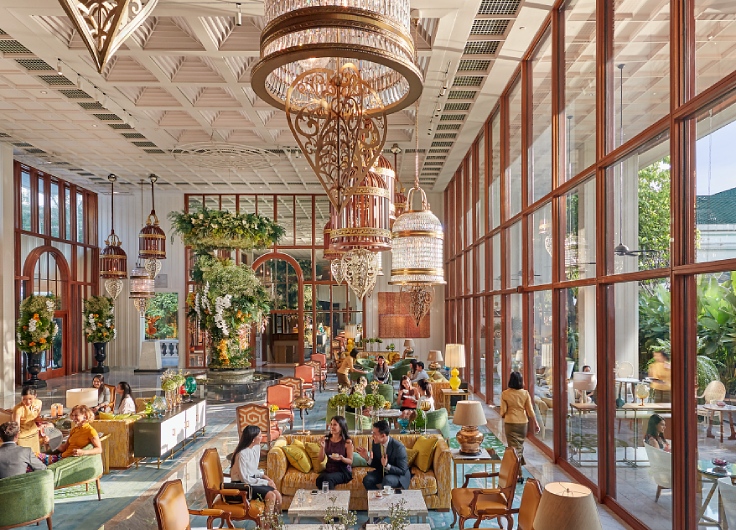
Often described as a “grand dame” of hospitality, Mandarin Oriental is the result of a union between Hong Kong’s The Mandarin and Bangkok’s The Oriental. The brand was born in 1985, when the two legendary luxury hotels merged to form a global icon.Known for its historic elegance, impeccable accommodations and some of the finest restaurants and bars in the region, Mandarin Oriental remains a go-to address for heads of state, literary legends and Hollywood stars alike.
Where to stay
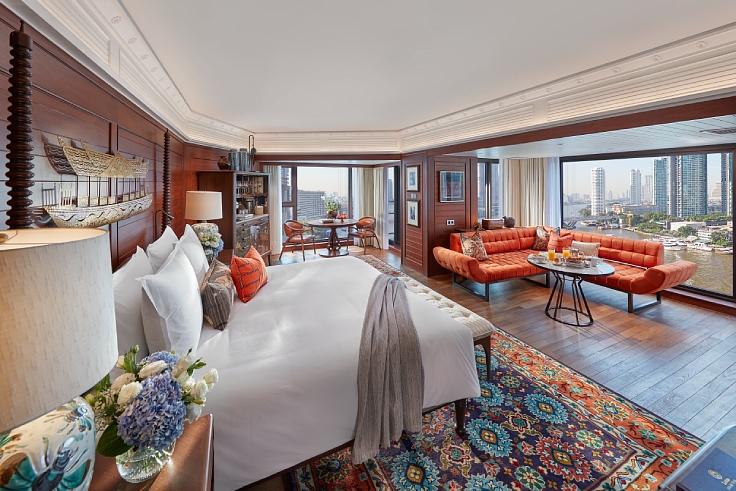
Although the brand spans prime locations around the world, one of its two flagship properties not to be missed is Mandarin Oriental, Bangkok, which proudly holds Three MICHELIN Keys. Originally opened in 1876 as The Oriental — widely regarded as Thailand’s first hotel — the property has long been celebrated for hosting royalty, including Crown Prince Nicholas of Russia.Today, the hotel continues to captivate with its storied heritage, made all the more iconic by its role as a filming location for Bangkok scenes in the third season of HBO’s The White Lotus. Whether cruising along the Chao Phraya River aboard the hotel’s private teakwood shuttle or sipping a perfectly chilled martini at the Bamboo Bar, every moment at Mandarin Oriental, Bangkok feels cinematic.
Header image: © Anantara Golden Triangle Elephant Camp & Resort