27 January 2026
.jpg)
Share


Is there anything more comforting than carbs? When it comes to comfort food, it is hard to beat the soothing warmth of noodles and hot soup. Carb lovers will find exactly that, and more, at No Name Noodle, an upscale ramen nook that has earned a place in the Bib Gourmand selection of The MICHELIN Guide Thailand 2026.
This is not a typical ramen joint. Since opening three and a half years ago, the restaurant has built a reputation for being notoriously difficult to book. It initially served just 10 bowls per day, but its lunch service has since expanded to 48. What draws diners are premium ingredients sourced from Japan, along with the meticulous craft behind the freshly made noodles and deeply complex broths.
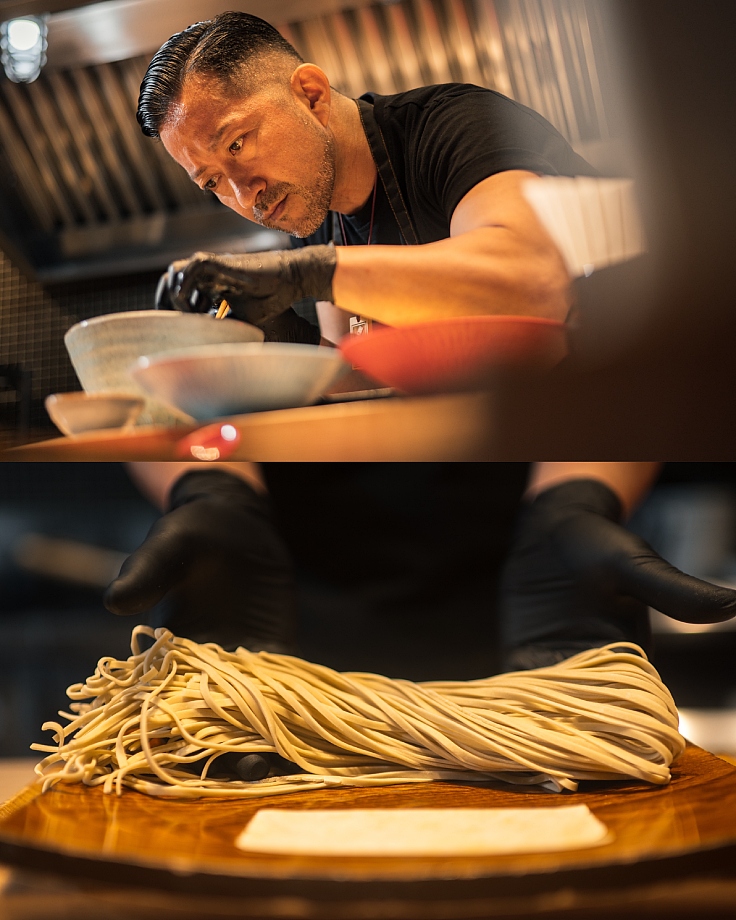
The lively Shinji Inoue prepares and serves every bowl himself at the counter, turning each meal into an intimate, chef-led performance. By engaging diners throughout the experience and adjusting noodle portions to individual preferences, Inoue brings a refreshingly personal approach, one he hopes will redefine how ramen is experienced.
“More than a hundred years ago, sushi was mostly sold from stands and considered a quick bite,” Inoue says. “Those stalls eventually evolved into shops and became the restaurants we see today, whether sushi is served on a conveyor belt or one bite at a time in an omakase setting by a chef. The spectrum has grown very wide, from cheap to midrange to very expensive sushi. Ten years from now, customers should be able to choose from many grades of ramen. I want to serve ramen one bowl at a time, the way sushi is served.”
At the forefront of elevating ramen beyond the quick, inexpensive meal it is often considered in Japan, No Name Noodle offers diners a glimpse of what the future of ramen could look like.
Japanese flavor, Bangkok address
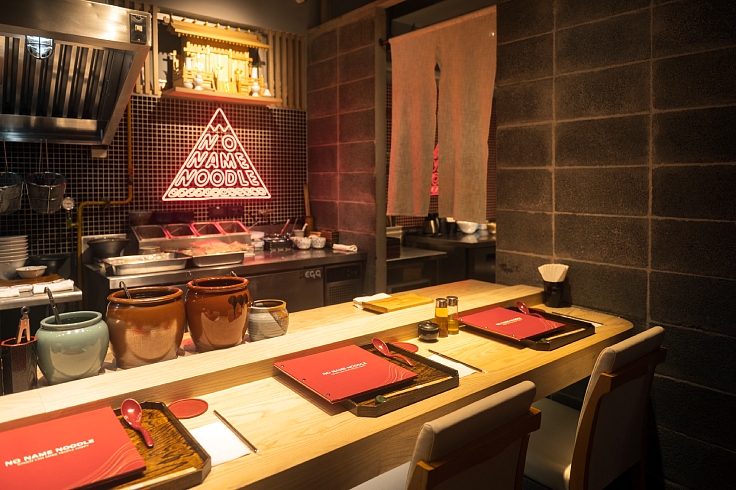
With an if-you-know-you-know air, the 12-seat No Name Noodle bears no signage by design. Instead, look for a discreet shopfront clad in gray brick and pale wood inside S&P Hall on Sukhumvit 26 in Bangkok. Step inside and it feels as if you have been transported to a traditional counter-style restaurant in Japan, bathed in the red neon glow of the No Name Noodle sign. The restaurant’s triangular graphic logo alludes to Mount Fuji, framed by the clouds that surround it.“We did not want to have a name or a brand,” explains Shinji Inoue. “We wanted the atmosphere and truly authentic flavors to be what draw customers in.” He adds, “What I want most is for customers to smile and feel happy after eating the ramen. I want them to become familiar with ingredients from nature.”
It is precisely this openness to new ideas that has made Bangkok a playground for craftsmen from around the world, including Inoue, where curious, open-minded diners are willing to embrace unfamiliar formats and slower, more intentional dining experiences. “In Japan, people usually want their ramen quickly and inexpensively, but in Thailand, diners are happy to take their time and enjoy the experience, and that makes me happy to do this in Bangkok.”
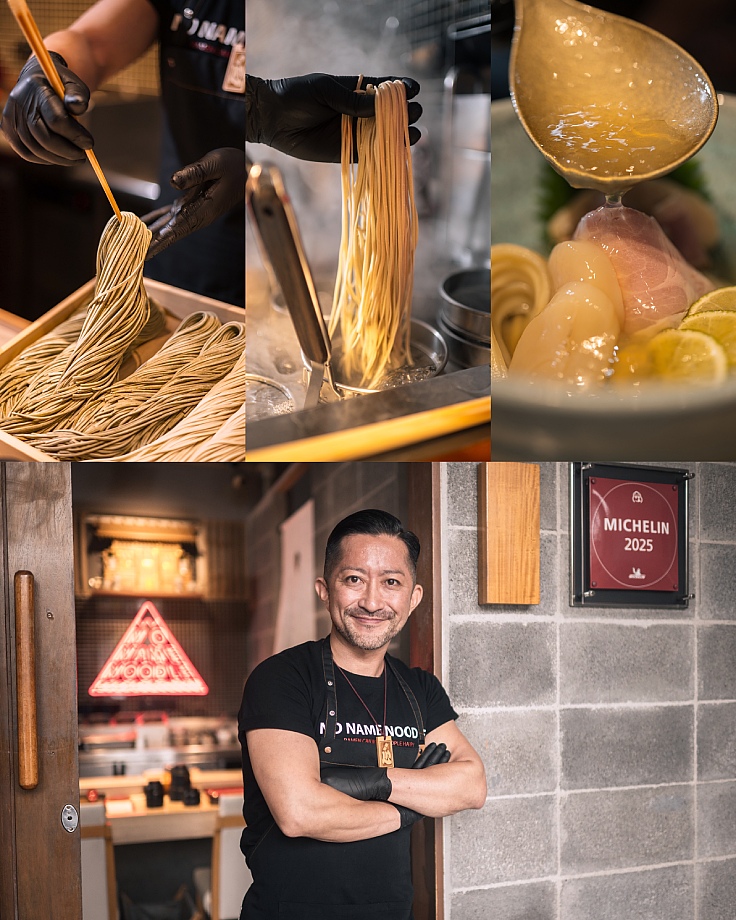
If he were not a chef today, he admits he would probably be a comedian, which helps explain his natural flair for showmanship. But ramen is in his bones as well. He grew up watching his mother run her ramen yatai, a cart stall where she served one customer at a time at a small counter.
After stints as a restaurant manager and chef at various Japanese eateries, and after learning from ramen masters across Japan, Inoue decided to bring greater refinement and craftsmanship to noodles as the COVID-19 pandemic waned.
“I am imitating what my mother did 40 years ago, serving each customer one at a time at the counter, just as she did,” says the 47-year-old chef. “However, she served very traditional ramen. My menus are completely different. I hope people will open their hearts to ramen as a craft, and that this approach will help elevate the entire industry.”
What to order?
Carb fanatics rave about the noodles at No Name Noodle for their springy yet smooth texture. Made fresh daily using only Hokkaido wheat flour and water, the handmade noodles stand out for their aroma and the chef’s meticulous technique in adapting to the weather. The amount of water used in the dough is adjusted each day, as Thailand’s air can shift from intensely humid to cool and dry depending on the season.Behind every immaculately twirled bundle, the Fukuoka native continues to research and refine his noodle recipes in pursuit of new flavors. Because a wheat grain has three main components, bran, endosperm and germ, even slight adjustments to the proportions of each flour can significantly alter the final flavor profile. Whichever of the four menu options you choose, noodle aficionados are likely to be slurping with glee.
No Name Noodle also goes against the grain by placing its dashi-based soup front and center. A more costly undertaking made with imported Japanese ingredients, including kombu seaweed and dried fish such as niboshi, katsuo and saba, the broth draws its depth from the sea, resulting in a delicate yet deeply umami profile.
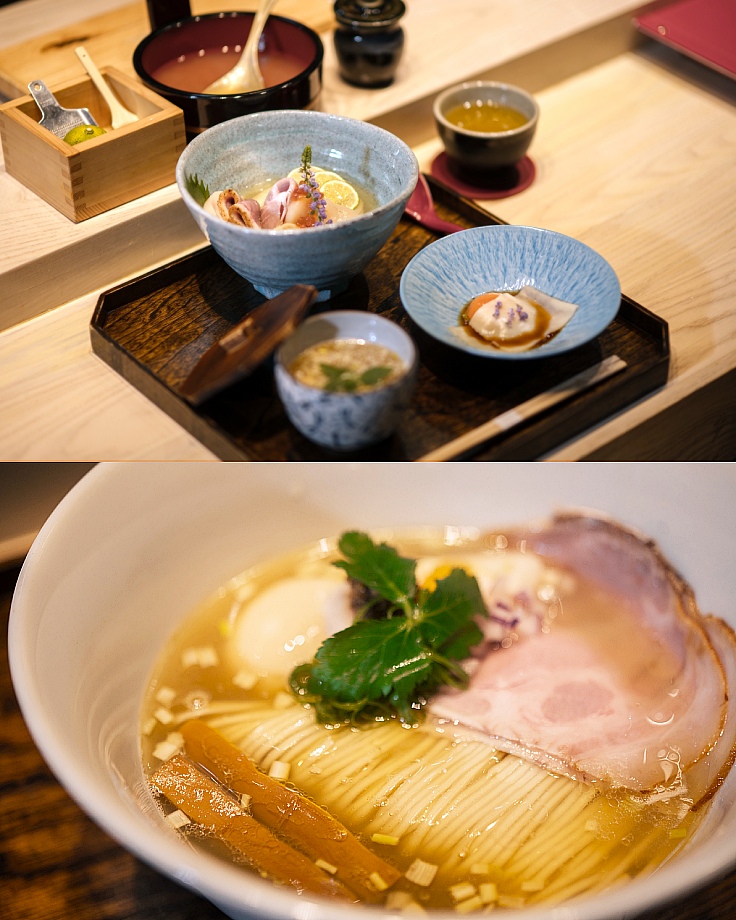
The asari and hotate shio ramen is a hot, hearty, salt-based option that blends dashi with clear chicken and clam broths. The soup remains crystal clear, never obscuring the noodles, and features a nuanced mix of four different types of salt from Japan. Topped with pork chashu, fermented bamboo shoots, a boiled egg and finely chopped mushroom duxelles that transform the broth when stirred in, the bowl delivers an ever-evolving balance of flavors, a thoughtful expression of ramen at its finest.
For something more special, the restaurant’s seasonal menus offer a chance to sample unorthodox toppings and the freshest ingredients of the moment. Expect premium additions such as oysters or scallops, the latter previously featured in the seasonal hotate tsuke soba.
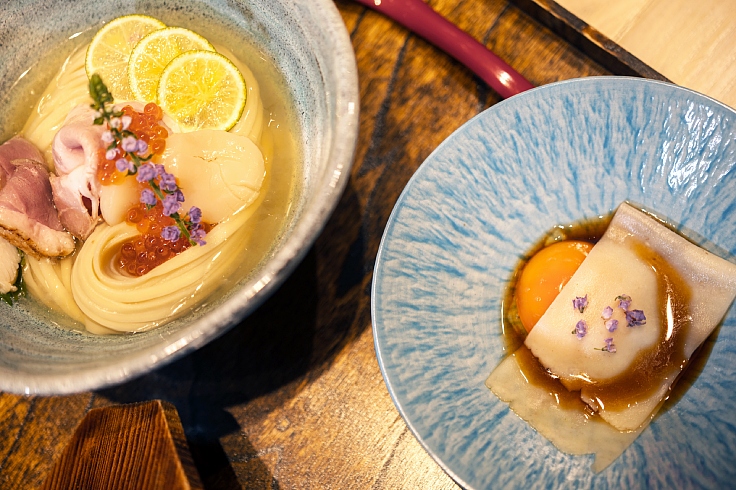
The mochi noodles, named for their pleasantly chewy, rice cake-like texture, are coated in kombu dashi jelly to prevent them from drying out. Dip them into the scallop broth or raw egg to cloak each strand in layers of savory, saline richness.
If you want a taste of everything, order the signature Matsuri Gozen, a special kombusui tsuke soba set that lets you sample both of the house’s main soups, highlighting the best of blended shio (salt) and shoyu (soy sauce). One side features a clear chicken broth, the other an asari clam soup, along with a raw egg for dipping both the mochi noodles and green tea noodles.
The set also includes a wagyu beef bowl that melts in your mouth. Flavor combinations are nearly endless, though the silky noodles are just as satisfying on their own or lightly dipped in salt. It is proof that, at No Name Noodle, everything truly revolves around the noodles.
Feeling lucky? Take a shot at Bangkok’s hottest ramen spot. No Name Noodle opens for lunch only and serves just 50 bowls a day. Reservations are released weekly at 9 a.m. on Sundays for dining from Wednesday through Sunday. The restaurant is closed on Mondays and Tuesdays.
Header image © Chef Shinji Inoue at No Name Noodle. (© Anuwat Senivansa Na Ayudhya/The MICHELIN Guide Thailand)




%20-%20Aman%20Nai%20Lert.jpg)