03 March 2026
Share


As one of the most significant holidays in Chinese culture, Lunar New Year — and the festivities surrounding it, with food at its heart — marks the busiest season for Chinese restaurants around the world. Nowhere is this more evident than on Chinese New Year’s Eve, when families gather for the annual reunion dinner. Comparable to Christmas or even Thanksgiving dinner, this important feast brings loved ones together and has traditionally been celebrated at home, with traditional dishes varying by region. Today, however, it is increasingly enjoyed in restaurants, particularly in areas with significant Chinese diaspora communities.
This is especially true in Kuala Lumpur, where much of the Chinese community traces its roots to 19th-century migration from Southern China, particularly the provinces of Fujian and Guangdong. On Chinese New Year’s Eve, the reunion dinner makes for the busiest and most frenetic night of the year for many Chinese restaurants across the city. Yet at Sek Yuen — the oldest Chinese restaurant still operating in the Malaysian capital — the doors remain firmly shut on the night of the eve, as they have done every year.
RELATED: 15 Iconic Dishes to Celebrate the Year of the Horse — and Where to Eat Them
“We open for lunch only on the eve of the Lunar New Year, then close at night to have our own reunion dinner,” explains Phang Kwai Choong, head of operations at Sek Yuen. Now 63, he represents the third generation of the Phang family, who have owned and run the restaurant since opening it in 1948.
“In 1948, the restaurant’s very first day of business fell on the first day of the Chinese New Year. We stayed open through to the 15th day without a break,” he says. “We had our reunion dinner on New Year’s Eve, and we’ve kept the tradition ever since — so our staff can go home and be with their families before those two weeks begin.”
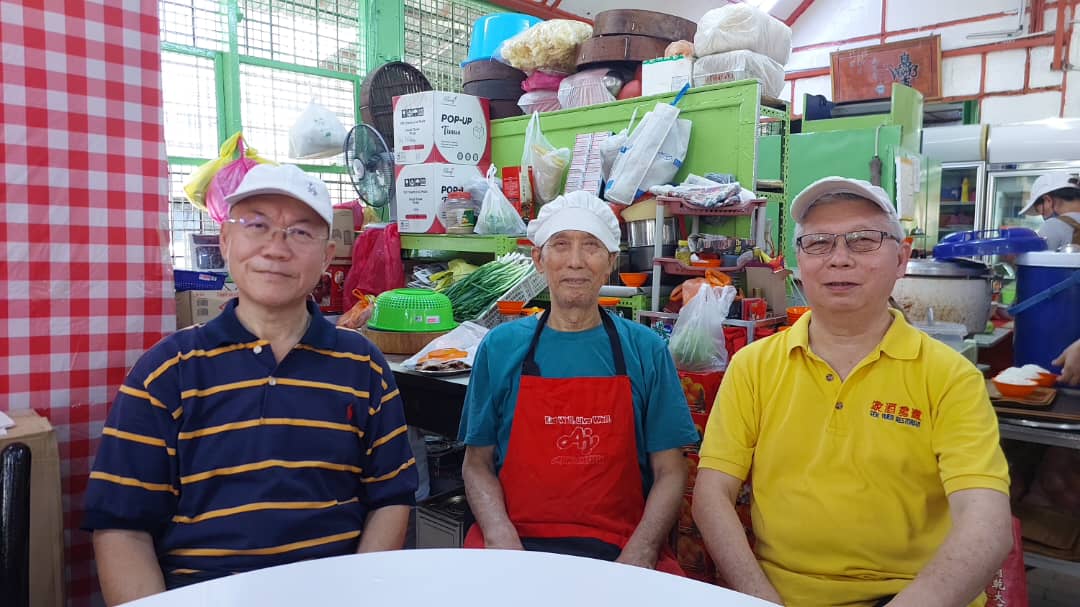
“Sure, every Chinese restaurant serves reunion dinners, and yes, it’s good business — it’s not like we don’t need the money,” says Phang Yew Kee, responsible for marketing and strategy at Sek Yuen. Though only a few years older than Choong, the 67-year-old is part of the family's second generation and balances his role at the restaurant with a career in real estate.
“It gets very busy. We are already almost full this year, because these days a lot of people are willing to eat the reunion meal for lunch, or even earlier,” he remarks. “The eve falls on a Monday this year. We have bookings for reunion dinners on both Saturday and Sunday before that.”
“Times have changed. Things are different now. Back in the fifties or sixties, reunion dinner absolutely had to be on the night of the eve — no ifs or buts,” he continues. “That might still be the case in China, but it’s very different in Malaysia now. Some people can’t take time off from work, while others have to travel abroad, so even though we close at night and only serve lunch on the eve, we’re full every year.”
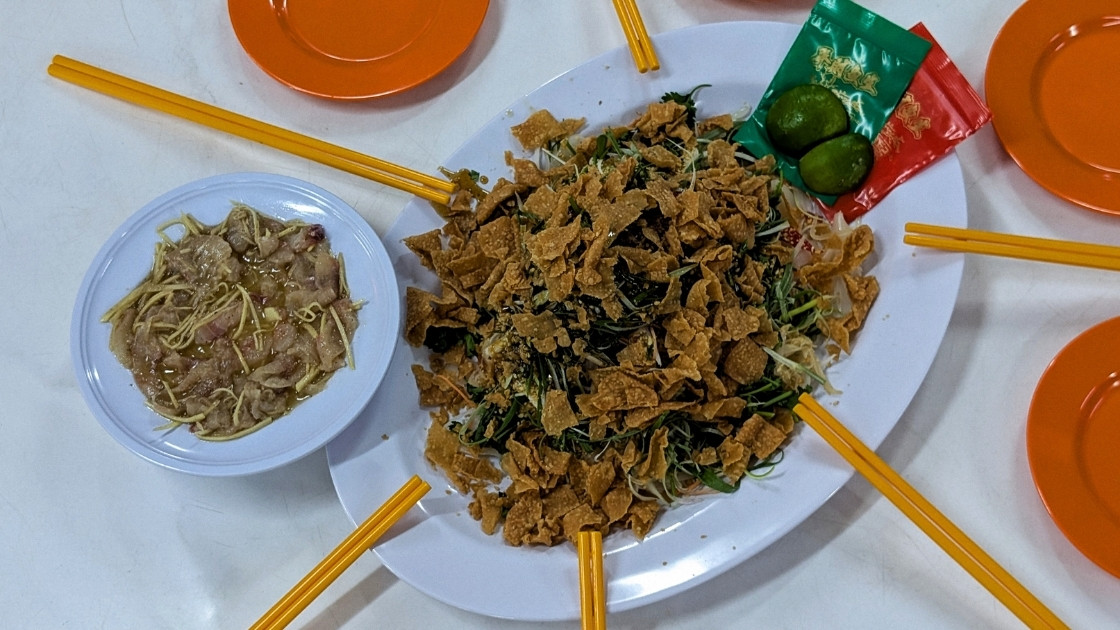
At the heart of any Chinese New Year meal — not just reunion dinner — in Malaysia is yu sheng, or yee sang in Cantonese. Served in both Malaysia and Singapore, its origins are slightly disputed between the two countries, with each claiming credit. In Malaysia, the widely accepted account is that yu sheng was adapted from an earlier dish by Loke Ching Fatt at his restaurant Loke Ching Kee, a Chinese restaurant in the city of Seremban, sometime in the mid-20th century.
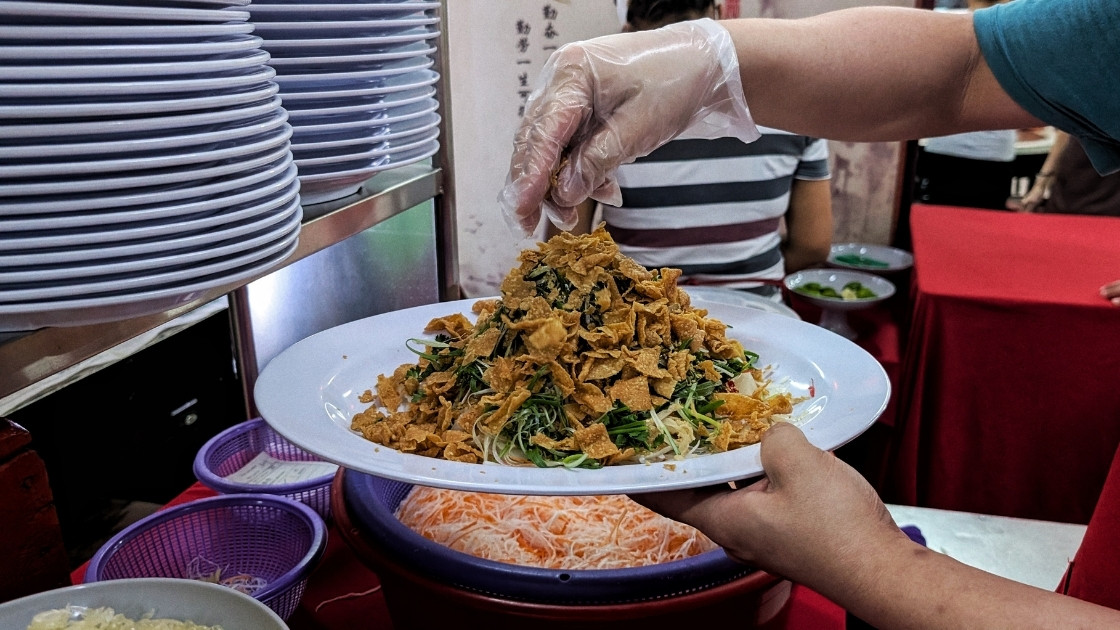
Today, it is a salad typically comprised of raw fish, jellyfish strips, shredded radish and carrots, pickled ginger and onion slices, pomelo and crushed peanuts, topped with fried flour crisps known as pok pok chui. An essential part of eating yee sang is the ceremony of lou sang, or lo hei. Five-spice, white pepper powder, oil and plum sauce are added in sequence, while Chinese New Year greetings wishing prosperity and longevity are recited to diners. They then toss the salad together, lifting it high with chopsticks as they shout further Chinese wishes associated with luck and wealth.
RELATED: Iconic Dishes: 7 Auspicious Eats to Boost Your Luck for the Lunar New Year
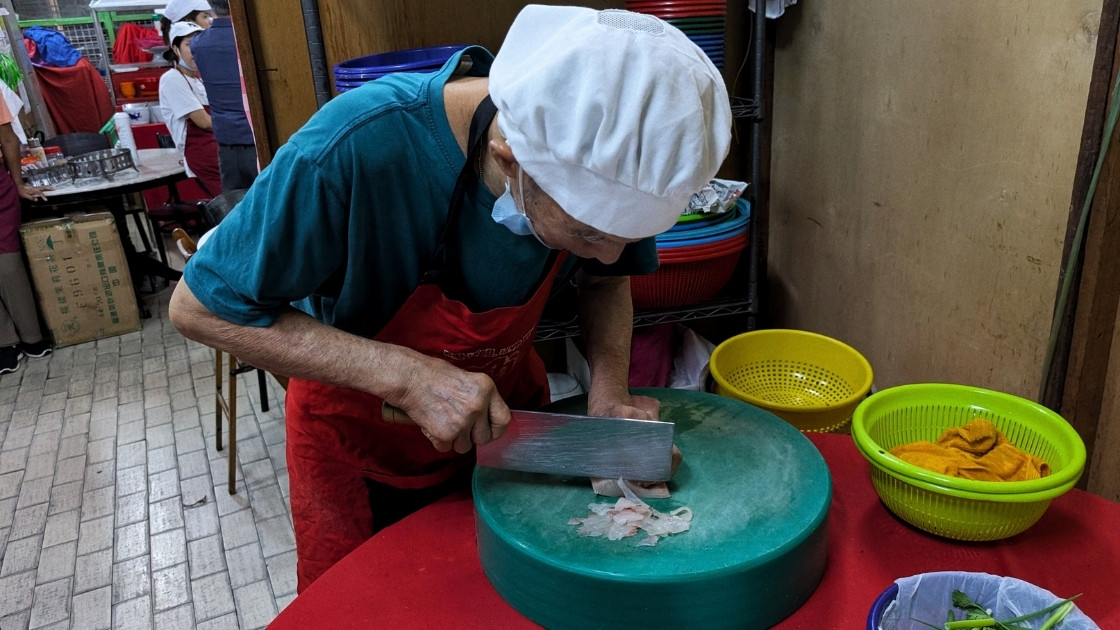
Salmon is the most popular choice of fish for yee sang in many restaurants today, but the traditional option has historically been grass carp, a freshwater fish commonly used in Cantonese cuisine. Known as wan yu in Cantonese, Sek Yuen continues to use it for its yee sang, slicing and dressing the fish in sesame oil, ginger and white pepper before it is added to the rest of the salad.
“The texture of salmon is too soft. We’ve only ever used wan yu from 1948 until now,” Kee explains. “We get it fresh in the morning and cut it and serve it on the same day. We never cut more than what is ordered, and we won’t serve anything that’s a day old or even two days old.”
Pang Yong Sui, who heads the kitchen, still cuts the fish to order into thin, near-translucent slices with a Chinese cleaver. At 78, he is the same age as the restaurant itself. A member of the second generation of the family, the alternate spelling of his surname is a vestige of Malaysia’s early, pre-independence civil registry, when the system was still in its infancy.
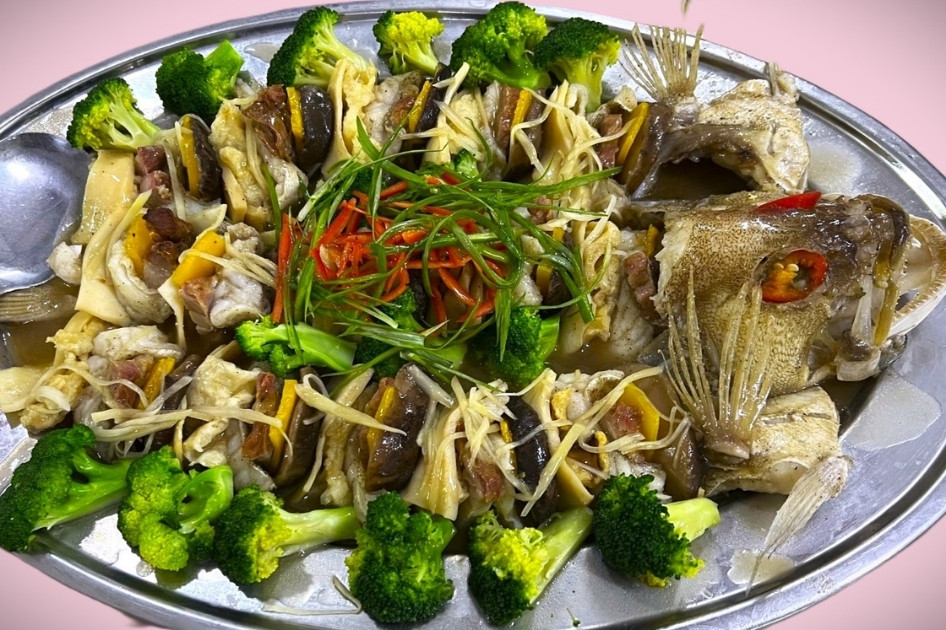
Like many other restaurants during Chinese New Year, Sek Yuen offers curated set menus. These provide a framework for incorporating traditionally symbolic ingredients and dishes, which for most Cantonese and Southern Chinese families include a whole fish, prawns and some form of roasted meat.
“The dishes are left to us by our ancestors. Yee sang is a must. Fish, prawns, mushrooms, abalone — these are all a must, absolutely,” Choong explains. “We might adapt the presentation to be a little more modern, but we do everything we can to maintain the gu zao wei (old-fashioned taste).”
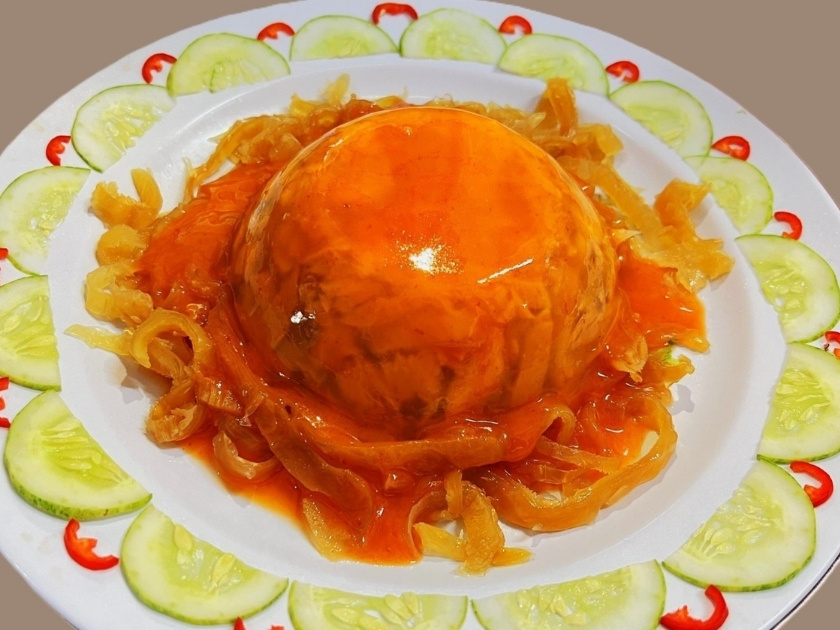
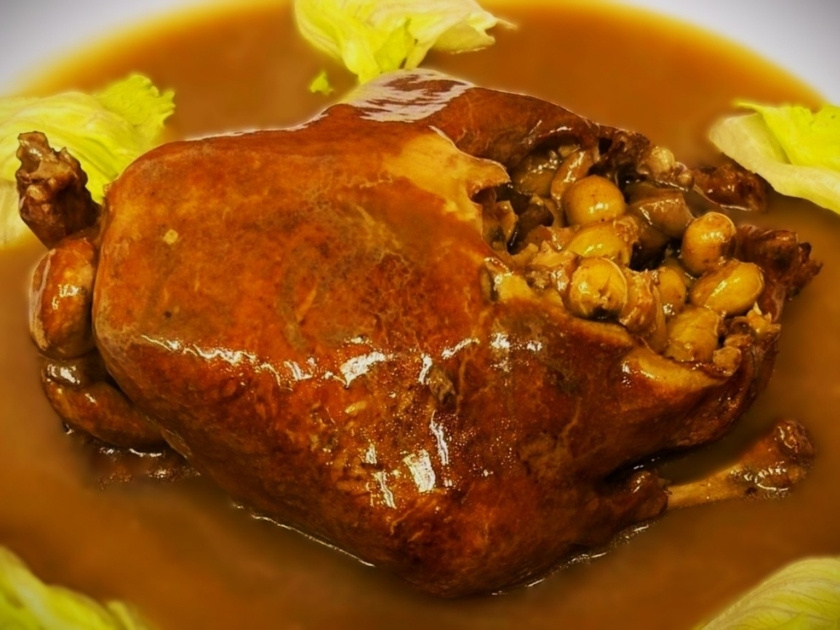
For many regulars, Sek Yuen is one of the few remaining places in modern-day Kuala Lumpur where that gu zao wei can still be found. Signature traditional dishes such as steamed grouper with roast pork and mushroom, cold jellied chicken with jellyfish and eight treasure duck keep diners returning across years, decades and even generations.
For Kee, Choong and Pang, that loyalty carries a sense of duty. “We feel a deep connection with a lot of our older customers. Many of them were either close with my parents or their parents were close with mine,” Kee says. “We owe a lot to them, because they brought us to where we are today.”
As a result, Choong explains, the restaurant does not restrict diners to set menus, a common practice elsewhere during Chinese New Year. “We’ve considered it before; it would really simplify things for our kitchen,” he says. “But some of our older customers have smaller families, and if we force them to take a set menu like every other restaurant, they may have no choice but to go to eat their reunion dinner at something like a stall. To us, it’s like a social responsibility to allow anyone to order à la carte, especially during Chinese New Year.”
Looking ahead, Kee is not fazed by the prospect of modernisation. “We’ve stuck to tradition all these years, 70, almost 80 years now. Even some of our dishes now were new creations at one point,” he says. The deep-fried salad shrimp on Sek Yuen’s menu now comes with salad cream, once an unthinkable addition. “It’s still a business, and in business you still have to innovate.”
In the kitchen, Pang continues to experiment, often guided by feedback from regulars. “Sometimes they try something outside, and they’ll show me a picture and ask me to try and recreate it,” he says. “It keeps my skills sharp, and I get to expand my cooking.”
“If all our customers change and their taste buds change, we have to adapt,” Kee continues. “But we won’t lose the meaning, the Chinese aspect of it. Otherwise, we might as well be replaced by those big robots, and the soul of cooking will be lost.”